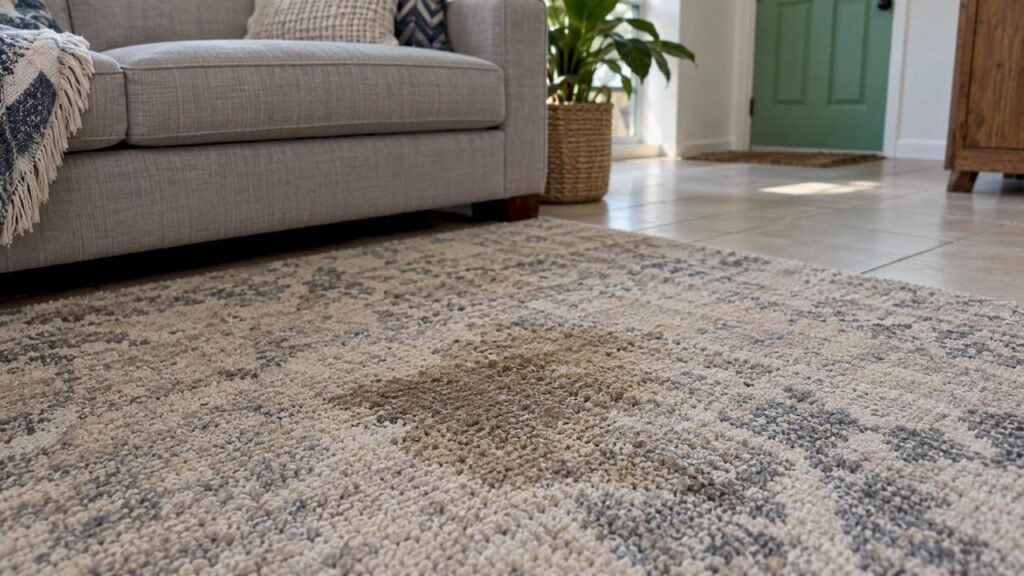
Pet urine on a rug is a two-part problem: the stain you can see and the urine you can’t. It runs through the pile into the backing and often the pad below, which is why a surface clean can look fine and still smell a week later. The right first move is to blot quickly and gently. The lasting fix is a deep, controlled clean of every layer the urine reached. In South Florida’s humid climate, that second step is the one that decides whether the odor stays gone, and it is the work our IICRC-certified team does on rugs across Miami, Broward and Palm Beach counties.
TL;DR
- Blot fresh urine right away with white paper towels. Never scrub, because scrubbing pushes urine deeper and can make dyes bleed.
- Urine can permanently change rug dyes and weaken fibers if it sits, so speed matters more than the product you pick.
- Smell that returns, especially on humid days, usually means urine remains in the backing or pad, not on the surface.
- Wool, silk, Oriental and Persian rugs, old stains and any color transfer while blotting call for a professional.
- Our area rug cleaning is priced at $1.50 to $5.00 per square foot and comes with a 21-day satisfaction guarantee.
Table of Contents
- Why urine does more than stain a rug
- What to do in the first minutes
- Why the smell comes back
- Rug type changes everything
- Why drying is half the job
- What professional rug cleaning does differently
- Is the rug worth saving?
- Getting the rug back in the room
- Book the clean while the damage is still reversible
- FAQ
- Sources
Why urine does more than stain a rug
Urine is not just liquid. The IICRC consumer tip sheet explains that it can react with textile dyes and fibers in two ways: an immediate color change, and a slow reaction that develops over days to months and can permanently damage dyes and weaken or destroy fibers. The Carpet and Rug Institute adds that on a beige carpet the blue dyes are the ones attacked, leaving red, yellow or orange patches, in its pet urine technical bulletin.
The Rug Owners Association describes three stages. Fresh urine is wet and mildly acidic, and is the easiest to remove. As it dries, the crystals turn alkaline and begin damaging dyes and fibers. Over time oxidation leaves permanent yellow or brown discoloration and weakens the rug’s foundation. The same source notes that urine salts attract moisture from the air, which reactivates old odors in humid conditions.
That last point is the Miami problem. A rug that smells clean in a dry January can smell like a litter box again in August. The urine was never fully removed, and humidity woke it up.
What to do in the first minutes
You can only limit the damage until a professional cleans the rug, but what you do in the first hour matters. The CRI bulletin gives this routine for a fresh accident:
- Blot, don’t rub. Press plain white paper towels onto the wet area, working from the outside in so the spot doesn’t spread. Use white towels so no dye from the towel transfers.
- Apply a mild detergent solution. Mix a quarter teaspoon of non-bleach, non-lanolin liquid dishwashing detergent into one cup of lukewarm water. Saturate a paper towel with it and blot the area.
- Rinse. Blot with warm water, and repeat while the towel is still picking up urine or the spot is improving.
- Neutralize. Blot with one cup of white vinegar mixed with two cups of water.
- Absorb. Lay a half-inch layer of paper towels on the spot, weight it with a flat, heavy, non-fading object, and change the towels often until the rug is completely dry. Take care not to over-wet.
If you can’t get to it right away, the IICRC tip sheet suggests laying a damp white cotton towel over the spot so the urine doesn’t dry in. A wet/dry vacuum helps for the initial pick-up.
The American Kennel Club gives the same basic idea for dogs: towels on top and underneath if you can reach, press for several minutes, then rinse with cool water and blot.
Stop there. If the towel picks up color while you blot, or the rug is wool, silk or an heirloom piece, don’t keep treating it yourself. Book a cleaning and keep the rug flat and out of the sun until the technician arrives.
Why the smell comes back
Most people clean what they can see. A rug has layers: pile, foundation, and usually a pad and floor beneath it. Urine travels through all of them, and the damp spot you notice on top is often smaller than the footprint underneath. A surface treatment reaches only the top.
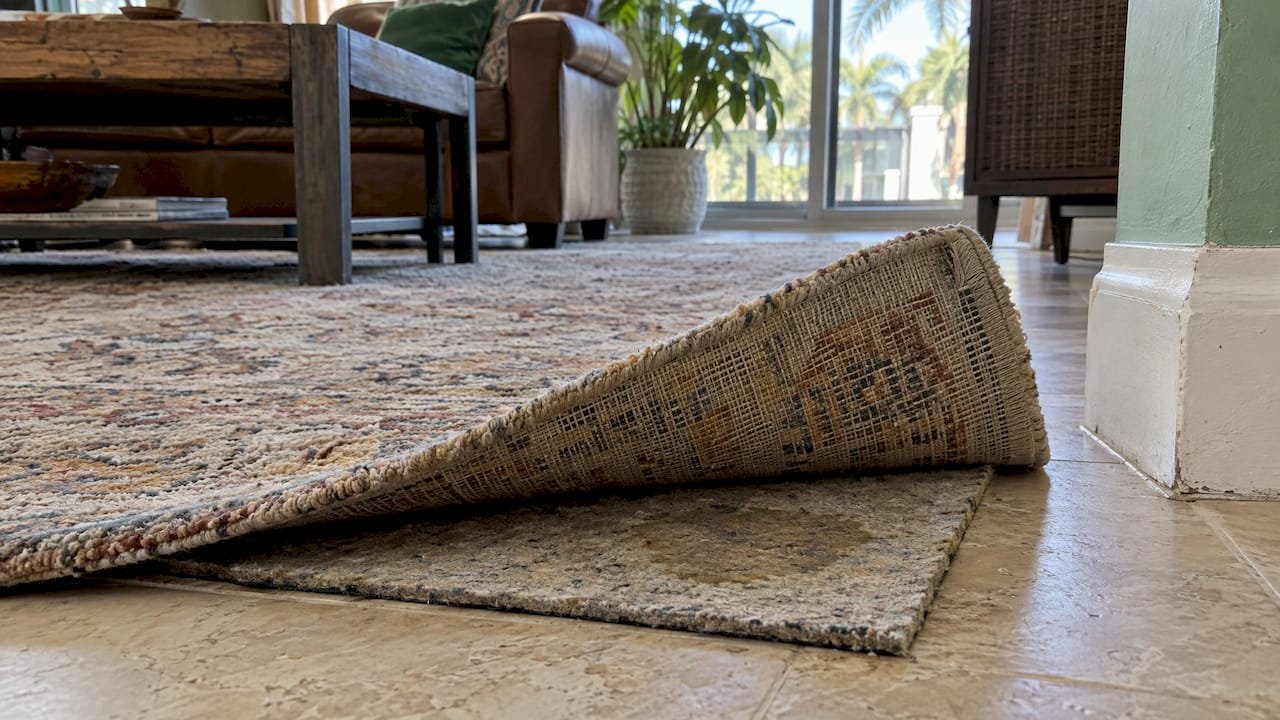
The Kentucky Humane Society makes a point that pet owners tend to learn the hard way: even when you can’t smell traces of urine, your pet can. Until that scent is gone, the pet keeps returning to the same spot, and house-training efforts are undermined. The CRI bulletin is blunt about cat urine in particular: unless it can be completely removed, complete odor removal is unlikely.
That is why a rug that has been blotted, sprayed and deodorized still produces the same complaint: “It smells fine, until it rains.”
Finding urine you can’t see
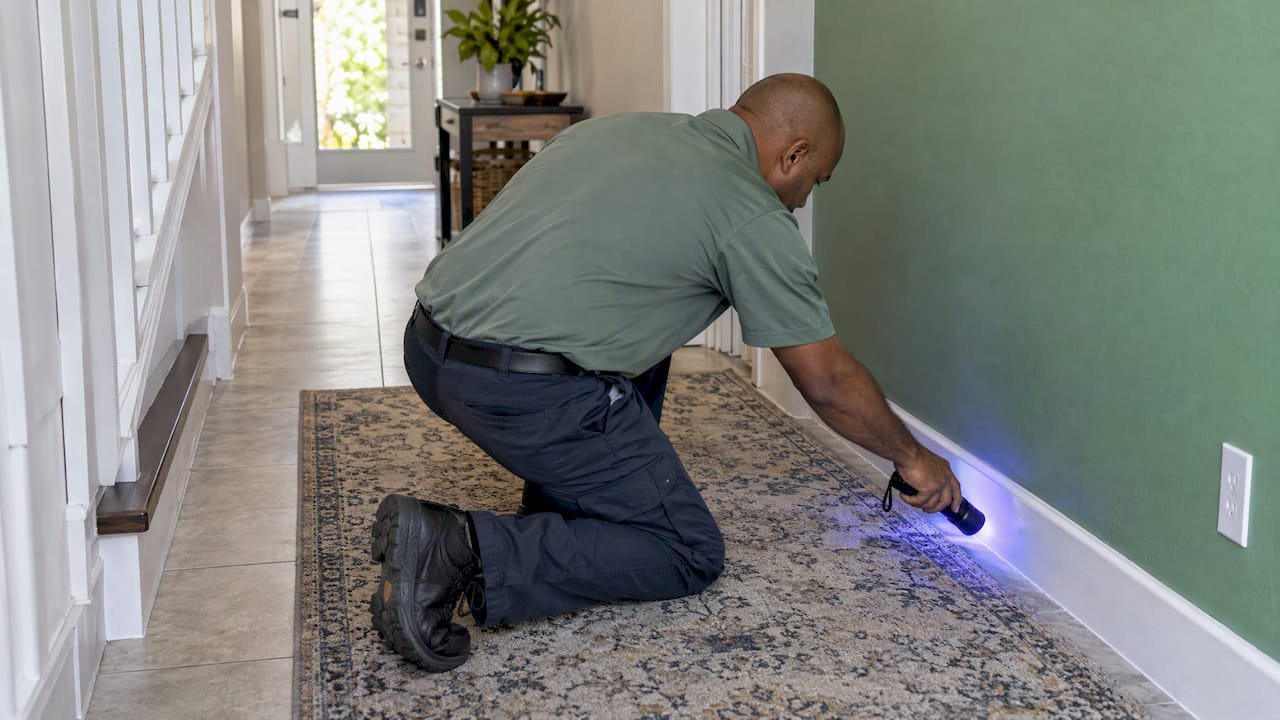
If you smell urine but can’t find it, get down low and sniff along the rug, its edges, the underside and the floor nearby. Cats may also spray baseboards and furniture legs. The IICRC tip sheet notes that professionals use a black (UV) light to find urine that is invisible to the naked eye, and that a treated area may still glow afterward because of phosphorus bonded to the fibers, not because urine remains. A glow is a clue to investigate, not proof either way.
Rug type changes everything
There is no single safe method for every rug. A synthetic rug in a condo and a hand-knotted wool rug are different jobs, and the difference shows up in dye stability, backing and how long the rug takes to dry.
| Rug type | What urine tends to do | What it needs |
|---|---|---|
| Synthetic (polypropylene, nylon, polyester) | Soaks into the backing and pad even when the face looks clean | Thorough extraction and controlled drying |
| Wool | Dyes can bleed once weakened; fibers can be harmed by harsh products | Fiber-appropriate cleaning and careful testing |
| Hand-knotted Oriental or Persian | Dye migration and foundation damage in the knots | Specialist handling; see our guides to Oriental rug cleaning and Persian rug cleaning |
| Cotton and flatweave | Absorb deeply and dry slowly | Full rinse and thorough drying |
The IICRC tip sheet cautions that 3% hydrogen peroxide, sometimes used on residual stains, is not recommended for wool or other natural fibers without extensive testing for color loss. The Rug Owners Association also says scrubbing or strong cleaners can cause color bleeding. Those are the two most common ways a rug gets worse during a home treatment.
Before any cleaning, the rug’s care label, the product instructions and the rug’s fiber and backing all have to agree. If they don’t, or you don’t know, that is a reason to hand it to a certified technician, not to experiment.
Why drying is half the job
A rug that stays damp inside grows its own problems: musty odor, dye lines and, in a Miami summer, a perfect environment for mildew. The CRI bulletin’s advice is to dry completely without over-wetting. The Rug Owners Association describes a proper odor-removal process as including inspection, pre-treatment, deep soaking and multiple rinses, sanitizing and deodorizing, and controlled drying in a ventilated, humidity-controlled space.
That last step is the one hardest to reproduce at home. Rugs in South Florida dry slowly when the air is already carrying moisture. Judge the result only when the whole assembly, face, underside, pad and floor, is dry, then check again the next day. A rug that smells clean at hour two and sour at hour twenty-four has told you something.
What professional rug cleaning does differently
Our approach to pet urine is built around the problem described above: removing urine from every layer it reached, not masking it on the surface. We are IICRC-certified, and we use hot water extraction, which flushes and pulls contaminants out of the rug instead of leaving them behind. Our eco-friendly, pet-safe cleaning solutions are chosen for homes where animals and children are on the floor, and our processes are tailored to South Florida’s heat and humidity.
The practical benefits for you:
- Odor and stain removal in one visit. The job targets the smell, not only the mark.
- Safe for pets and families. Dogs and cats can go back to their rug once it is dry.
- Same-day and next-day booking. Urine damage gets worse with time, so speed counts.
- A 21-day satisfaction guarantee. If a spot or odor isn’t what you expected, you have three weeks to tell us.
For a closer look at how we handle carpet and rug accidents, see our page on pet urine carpet cleaning, and if you’re wondering what a clean can and can’t do about smell, will carpet cleaning remove urine smell walks through it for Miami homes.
A worked cost example
Our area rug cleaning is priced at $1.50 to $5.00 per square foot. A 5 by 8 foot rug is 40 square feet, so the published range works out to $60 to $200 for that size. Where in the range you land depends on the rug and the job, and the size is easy to measure yourself. Pet urine treatment, large rugs and delicate fibers are discussed at booking so you know what to expect before we arrive.
Is the rug worth saving?
Most pet-stained rugs are. A few signs mean you should move fast and use a professional:
- Color transfer while blotting. Weakened dyes can bleed, especially on fine wool. Stop and book a cleaning.
- An old or repeated accident. Aged urine damage is harder to reverse, and some cases involve dye correction.
- A smell that persists after you’ve cleaned. It usually means urine in the backing or pad.
- A valuable or sentimental rug. Hand-knotted rugs are not a place to learn by trial and error.
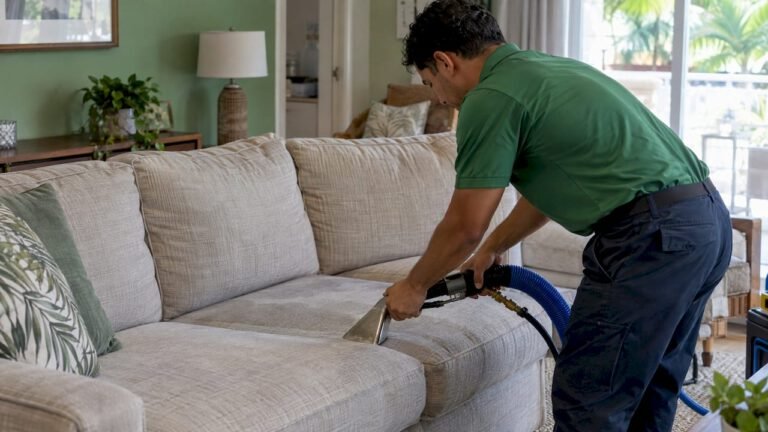
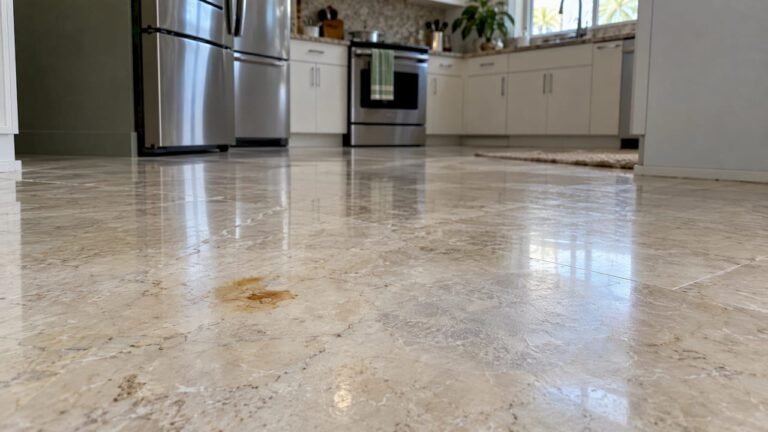
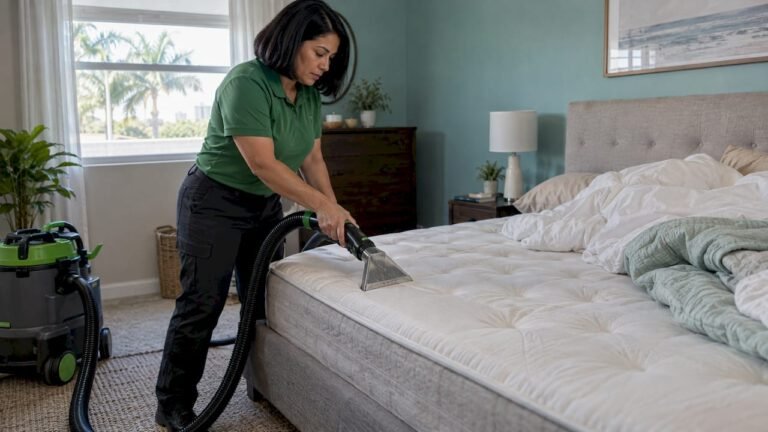
The pad deserves a mention. If it is soaked with urine, it often has to be replaced, and the floor under it should be treated before a new pad goes down. For urine that reached tile or stone underneath, our tile and grout cleaning and floor services cover those surfaces. If the accident happened on a mattress or sofa instead, we cover that too: see mattress urine stain cleaning.
Getting the rug back in the room
Before you put a cleaned rug back, make sure the following are true:
- The face and underside feel like the rug’s normal dry state.
- No dye is transferring onto a white towel pressed against it.
- The pad is dry or new, and the floor beneath is dry.
- You smell no urine from several angles, including the back of the rug.
- You recheck after 24 hours, especially on a humid day.
If your pet keeps returning to the same spot, treat that as a sign that some scent remains. Our guide to carpet odor removal explains how to find the source rather than chase the smell around the room.
Our view on pet urine and rugs
Every pet owner who calls us has already tried something: a spray, baking soda, a rented machine. The rug usually looks better and still smells wrong, because urine does not stay where you can see it.
We believe the answer is to treat the whole rug, from pile to backing, then dry it properly. That is what our IICRC-certified team is trained to do, and it is why we use hot water extraction with eco-friendly, pet-safe solutions. Miami’s humidity makes drying and odor control the real test, so our process is built for it.
We also think you should not have to wait. Urine damage compounds with every day, so we offer same-day and next-day booking, and our 21-day satisfaction guarantee means you can judge the result in your own home, in your own climate.
Dr
Book the clean while the damage is still reversible
If you have a rug that smells or is stained from a pet, our team can clean it at your home in Miami, Broward or Palm Beach County. We handle synthetic, wool and specialty rugs, and we can pick a time that works for same-day or next-day service.

See our area rug cleaning service for details and to book, or visit our carpet cleaning page if the urine reached wall-to-wall carpet as well.
FAQ
How do I remove pet urine from a rug without making it worse?
Blot with white paper towels as soon as you find it, working from the outside in, and never scrub. Follow the Carpet and Rug Institute routine of a mild detergent solution, a rinse and a diluted vinegar blot, then weight a layer of paper towels on top until dry. If any color transfers or the rug is wool or valuable, have it professionally cleaned.
Does Dawn dish soap clean dog pee?
A very small amount of mild liquid dishwashing detergent is part of the CRI first-aid routine: a quarter teaspoon in a cup of lukewarm water, using a non-bleach, non-lanolin product. More is not better, because soap left in a rug can attract dirt and cause problems of its own. Rinse well and blot dry.
What kills the smell of dog urine in a rug?
The smell lasts because urine remains in the rug, so the fix is removing it from every layer, not covering it. That means finding the full footprint, flushing it with multiple rinses and drying the rug completely. Humidity can reactivate leftover urine salts, so recheck the rug after 24 hours.
How long does a rug take to dry after cleaning?
There is no single answer, because it depends on the fiber, the construction, the humidity and the airflow. Judge odor and stain only once the face, underside, pad and floor are all dry. In South Florida’s humid weather, allow extra time and keep air moving around the rug.
Can old, dried pet urine be removed from a rug?
Often, yes, but it is harder than fresh urine because dried urine can already have affected the dye and fibers. Dried spots usually need rehydrating and thorough extraction, and in some cases the pad needs replacing. Book a cleaning soon, since the damage progresses over days to months.
Sources
- Pet Urine and Carpet Technical Bulletin, Carpet and Rug Institute
- IICRC Consumer Floor and Furnishings Care Information
- How to Get Dog Pee Out of Carpet, American Kennel Club
- Pet Urine & Odor, Rug Owners Association
- Successful Cleaning to Remove Pet Odors and Stains, Kentucky Humane Society
Recommended
- Pet Urine Carpet Cleaning: What Works and When to Call a Pro
- Will Carpet Cleaning Remove Urine Smell? Miami Guide
- Carpet Odor Removal: Find the Source, Fix It for Good
- Safe Carpet Cleaning for Pets: What to Ask and Avoid
Want it done right the first time?
Our IICRC-certified team handles carpet, upholstery, tile and stone across Miami-Dade, Broward and Palm Beach, usually the same day.