Furniture Deep Cleaning: Methods, Steps and When to Hire a Pro | South Florida | Dr Steemer
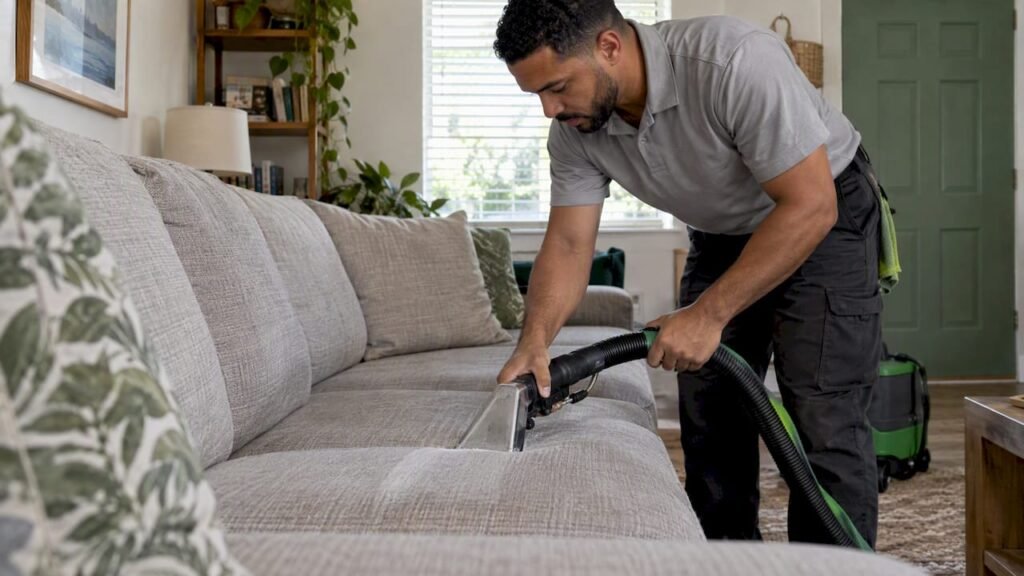
Deep cleaning upholstered furniture means removing the soil that vacuuming and spot treatment leave behind, without soaking the fabric or stripping its color. You can do a careful version yourself with a vacuum, a microfiber cloth and a fan. Overall soiling, set-in stains, pet odors and delicate fabrics are better handled by a certified technician. This guide walks through both routes, explains how steam cleaning, hot-water extraction and shampooing differ, and covers the drying step that matters most in South Florida.
TL;DR
- Check the cleaning code on the tag (W, S, W/S or X) before anything touches the fabric, and test any solution on a hidden spot.
- Blot, never rub, and use as little water as possible. Slow drying is what causes browning, mildew and odor.
- Steam and wet methods suit most water-safe fabrics but can harm silk and some cotton, rayon and linen. When in doubt, ask a professional.
- Overall soiling, fresh stains you cannot lift and rodent exposure are good reasons to book professional cleaning.
- In humid Miami, Broward and Palm Beach homes, controlled moisture and fast airflow decide whether a cleaning works.
Table of Contents
- What deep cleaning means for upholstered furniture
- Read the cleaning code first
- Steam, hot-water extraction, shampoo or solvent
- How to deep clean a couch yourself, step by step
- Pet stains and odors
- Drying: the step that decides the result in Florida
- When to hire a professional
- Our perspective: why South Florida upholstery is different
- Professional furniture cleaning from Dr. Steemer
- Frequently asked questions
- Sources
What deep cleaning means for upholstered furniture
A weekly vacuum and a quick wipe is maintenance. Deep cleaning goes into the cushions, the seams and the fibers, where body oils, skin cells, food, pet dander and dust collect. The goal is to lift that soil out of the fabric, not push it around or leave it wet.
It helps to separate three jobs that often get lumped together:
- Dry soil removal: thorough vacuuming of the seat, back, arms, underside and crevices.
- Spot treatment: targeted work on a stain or spill with a suitable cleaner.
- Overall cleaning: treating the whole surface so you do not end up with clean patches against dingy fabric.
Extension guidance from the University of Nebraska recommends professional cleaning for overall soiling and advises asking a professional when you are unsure how to remove a stain. That is a fair line to draw: spot jobs are a reasonable DIY task, whole-piece deep cleaning is where risk and effort climb.
Read the cleaning code first
Every decision starts with the tag, usually under a seat cushion or along the underside of the frame. According to Good Housekeeping’s couch cleaning guide, the codes mean:
| Code | What it allows |
|---|---|
| W | Water-based cleaners |
| S | Solvent-based (water-free) cleaners only |
| W/S | Either water-based or solvent cleaners |
| X | Vacuuming or brushing only |
Three practical notes:
- An S or X couch should not be wet cleaned at home. Water-based shampoo or a steam wand is the wrong tool.
- No tag, or a tag worn away, means you should treat the piece as unknown and test carefully or call a professional.
- The code covers the fabric, not the whole piece. Leather trim, wood frames and loose dye in a throw pillow can behave differently.
Then spot-test. Good Housekeeping advises trying the solution on a hidden area first to make sure it does not change the fabric’s color or texture. The back panel or the inside of a skirt works well. Let the spot dry fully before you judge it, because some dye changes only show once the fabric is dry.
Steam, hot-water extraction, shampoo or solvent
People use “steam cleaning” loosely. In practice the term can mean a handheld steamer, or a professional hot-water extraction machine that sprays a cleaning solution and pulls it back out with strong suction. The University of Nebraska guide lists the wet-cleaning methods as hot-water extraction, foam and shampooing, while dry cleaning uses solvents.
| Method | How it works | Best for | Watch out for |
|---|---|---|---|
| Handheld steamer | Steam softens and lifts surface dirt | Light refreshing, surface dust mites on W-coded fabric | Silk; heavy soil; overwetting |
| Hot-water extraction | Solution is applied, then extracted with suction | Overall soiling on water-safe fabrics | Slow drying if the technician over-wets or airflow is poor |
| Shampoo or foam | Foam agitates soil from the surface | Light to moderate soil | Residue left in the fabric if not rinsed or extracted |
| Dry-cleaning solvent | Water-free solvent dissolves oils | S-coded fabrics | Needs ventilation and the right product; not a DIY job for large areas |
Steam does have a real benefit. Good Housekeeping suggests steaming a couch to kill surface dust mites, letting only the steam touch the fabric. But Martha Stewart’s upholstery guide says a handheld steamer can lift dirt and debris yet should not be used on fabric containing silk, because steam and liquid techniques can damage fabric or coloring.
There is another reason to be careful with moisture. The Nebraska guide notes that water and dry-cleaning solvents can disturb the sizing found in cotton, rayon and linen. Sizing is the finish that gives those fabrics their body, so a heavy-handed clean can leave them limp or ringed.
The short version: the right method depends on the fiber, the code and the kind of soil. A technician who identifies the fabric first is doing the most important part of the job.
How to deep clean a couch yourself, step by step
This routine suits W or W/S fabrics in good condition. Skip it for X-coded pieces, silk, or anything antique or very valuable.
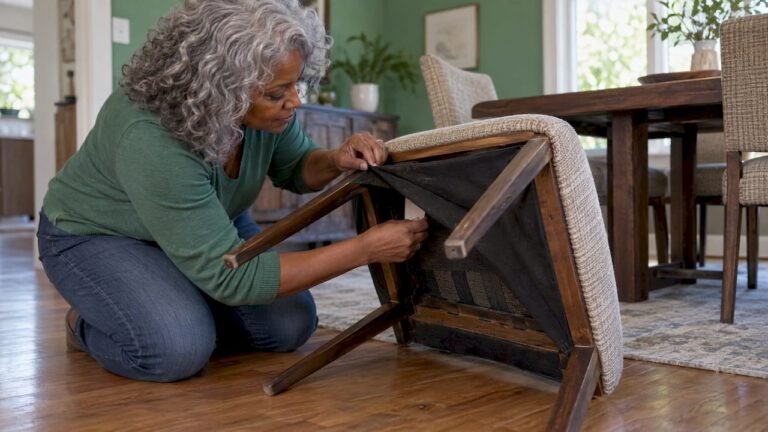
- Strip it down. Remove covers and cushions if the piece allows. Martha Stewart’s guide starts here, then vacuums the furniture including the cushions.
- Vacuum thoroughly. Use the upholstery attachment, then a ruler or small brush to work debris out of crevices. Dry soil turns to mud when it meets moisture, so do not skip this.
- Check the code and spot-test. Pick a hidden area and let it dry.
- Dampen the cloth, not the couch. Good Housekeeping’s advice is to apply cleaner to a cloth rather than directly on the fabric, then blot from the outside of the stain inward. Working inward keeps the stain from spreading.
- Blot or tamp, never scrub. Rubbing can distort the fabric and push a stain deeper.
- Rinse lightly. This Old House suggests wiping with a cloth dampened with clean water afterward, then letting the sofa air-dry completely. Leftover cleaner attracts new dirt.
- Dry with airflow. Set up a fan (see the drying section below) and keep cushions propped so air reaches every side.
Do not saturate the piece at any step. Even on water-safe fabrics, This Old House cautions that too much moisture in furnishings not built for it is a bad idea. Foam cushion cores hold water for days.
Pet stains and odors
Pet accidents are the most common reason people call for upholstery cleaning, and they punish the wrong first move. The Wirecutter sofa guide recommends blotting a spill right away with a dry white cloth to remove as much residue as possible. Then apply a suitable spot cleaner to a cloth and dab gently, working from the outside toward the center.
What to avoid:
- Rubbing. It spreads liquid and drives it into the padding.
- Pouring cleaner on the stain. Whatever you add has to come back out.
- Heat on old stains. A hot iron or steam on an unidentified protein stain can set it. Test first.
Odor is the tricky part. If urine has reached the cushion core, surface cleaning only masks it. That is the point where extraction equipment and a technician who can treat below the surface earn their fee. If you want a sense of what that looks like on a real job, our before and after sofa upholstery project shows results from South Florida homes.
Drying: the step that decides the result in Florida
In a humid climate, the cleaning is only half the work. If upholstery stays damp, you risk mildew, musty smell and discoloration.
- Use a fan. Martha Stewart’s guide advises air-drying quickly, and notes that a ceiling or box fan can help prevent mildew or mold.
- Skip the heat. This Old House says to never use heated air from a hair dryer or space heater on upholstery.
- Watch plant-based fabrics. The IICRC upholstery tip sheet explains that cellulosic browning can occur when fibers such as linen or cotton get wet and dry slowly, leaving yellow to brown discoloration. Slow drying is exactly what a sticky August afternoon encourages.
Practical Florida habits: clean on a day you can run the air conditioning, which also pulls moisture from the room. Point a fan across the piece, not at one spot. Keep the couch out of a closed, humid room until it feels dry to the touch all the way through, including under the cushions.
If you store or keep furniture outdoors on a lanai or patio, protection matters as much as cleaning. Covering pieces during the off-season, for example with professional patio furniture wrapping, keeps dirt and moisture off fabric you will later want to clean less often.
When to hire a professional
DIY works for fresh spills and light refreshing. Call a professional when:
- The whole piece looks dull or smells. Overall soiling is where professional cleaning is recommended by extension guidance.
- A stain is fresh but stubborn. The same guidance says that for best stain removal, items should be professionally cleaned while the stain is fresh. Waiting weeks lowers your odds.
- The tag says S or X, or there is no tag. Mistakes here are the costly ones.
- The fabric is silk, or an unknown natural fiber. Moisture risk is highest.
- Rodents have been in the furniture. Utah State University Extension says to steam clean or shampoo upholstered furniture with evidence of rodent exposure, which calls for proper equipment and protective handling, not a damp rag.
- Allergies are a concern. Extraction pulls out dust and dander that surface wiping leaves behind.
What to ask any cleaner before booking: how they identify the fabric, what method they would use on your piece, how long drying takes, and what happens if you are not happy. Look for IICRC certification, the industry’s standards body for the cleaning trade.
Protect it after cleaning
The IICRC tip sheet recommends professional fabric protection when furniture is new and after each professional cleaning. It helps you vacuum dry soil away and gives you more time to blot a spill before it sinks in. For a family with kids or pets, that extra minute is often the difference between a wipe and a service call.
Our perspective: why South Florida upholstery is different
We clean furniture in Miami-Dade, Broward and Palm Beach homes every week, and the pattern is consistent: the cleaning method matters less than how much water stays behind. Heat and humidity mean fabric holds moisture and traps odors, so a technique that is fine in a dry climate can leave a couch damp for days here.
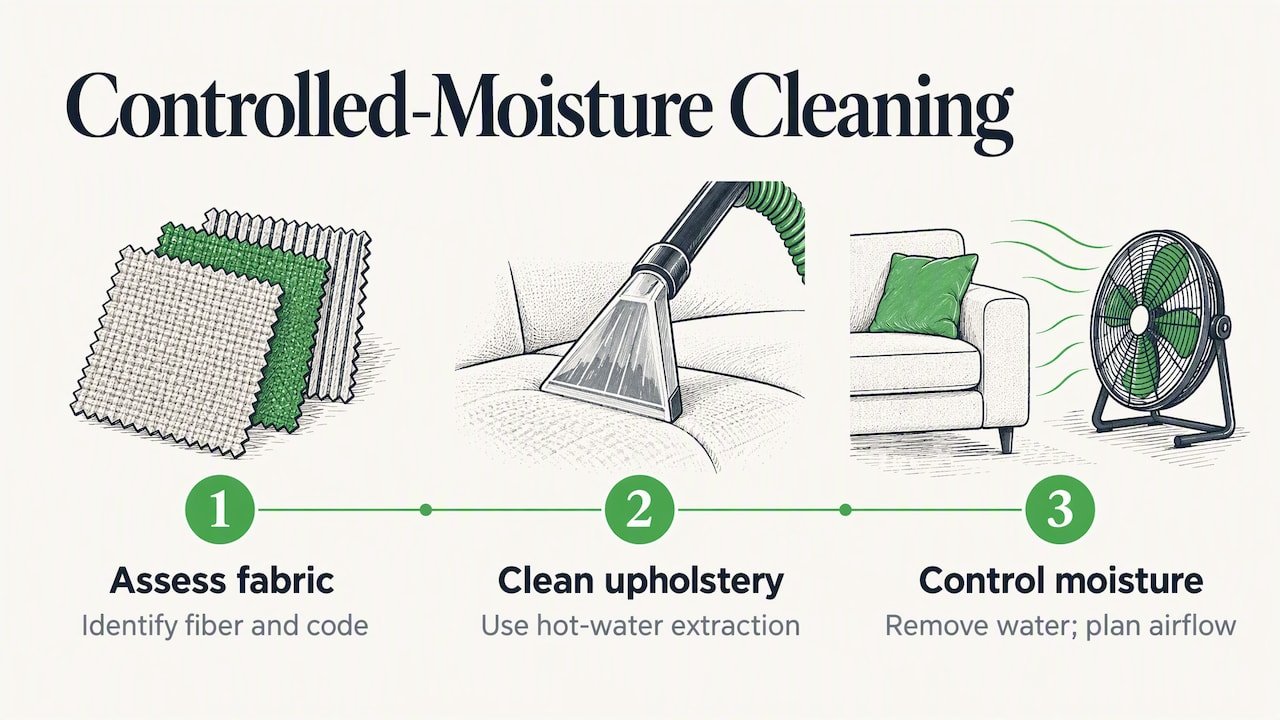
That is why our process is built around controlled moisture. We use hot-water extraction with eco-friendly, pet-safe products, remove as much water as the equipment can pull, and plan airflow before we leave. Our technicians are IICRC-certified, which means they are trained to identify the fiber and read the code before choosing a method, not after.
Our advice to homeowners is simple. Do the vacuuming and fresh-spill blotting yourself, because that is cheap and effective. Do not experiment on a whole sofa with a rented machine and an unknown fabric. And if a piece is the centerpiece of your living room, have it cleaned when it looks tired, not when it looks ruined.
— Dr
Professional furniture cleaning from Dr. Steemer
We clean sofas, sectionals, chairs, dining chairs and mattresses in Miami-Dade, Broward and Palm Beach counties, with same-day and next-day booking when you need it fast. Every job is backed by our 21-day satisfaction guarantee.
Start with our upholstery cleaning page, or see local details for Miami upholstery cleaning and couch cleaning in Miami. If the rest of the room needs attention, we also clean carpets, with published pricing of $99-$300, and mattresses in the same visit.
Frequently asked questions
Is it better to shampoo or steam clean a couch?
For overall soiling on a water-safe fabric, hot-water extraction (often called steam cleaning) is generally the better choice, because it pulls the solution and soil back out. Shampooing can leave residue if it is not extracted. Whatever method you choose, the tag code and a spot test decide what is safe.
How often should upholstered furniture be deep cleaned?
There is no single schedule. Homes with pets, kids, allergy sufferers or heavy daily use benefit from more frequent professional cleaning, while a rarely used guest chair can go much longer. Clean sooner when you notice dullness, odor or stains that blotting no longer lifts.
Can steam cleaning damage my sofa?
Yes, on the wrong fabric. Steam should not be used on silk, and moisture can disturb the sizing in cotton, rayon and linen. Slow drying can also cause browning on plant-based fibers. Check the code, test a hidden spot and dry the piece quickly with a fan.
How long does furniture take to dry after professional cleaning?
It depends on the fabric, the amount of moisture used and the airflow in your home. In humid South Florida, running the air conditioning and a fan across the piece speeds drying. Ask your technician for an estimate for your specific furniture before the appointment.
Do you clean furniture on the same day?
We offer same-day and next-day booking across Miami-Dade, Broward and Palm Beach counties, depending on availability. Use our upholstery cleaning page to request an appointment and tell us the fabric type, the problem and the number of pieces.
Sources
- How to Clean Upholstery, Martha Stewart
- The Right Way to Clean a Couch, Good Housekeeping
- How to Clean Upholstery, This Old House
- EC86-418 Upholstered Furniture Care: Cleaning and Stain Removal, University of Nebraska
- IICRC Consumer Floor and Furnishings Care Information: Upholstery
- How to Clean a Sofa, Wirecutter
- Find a Mouse in Your House? Utah State University Extension
Recommended
- Couch Cleaning Miami | Expert Upholstery & Sofa Cleaning
- Professional Furniture Cleaning Miami FL Services
- Professional Furniture Cleaning Miami FL Services
Want it done right the first time?
Our IICRC-certified team handles carpet, upholstery, tile and stone across Miami-Dade, Broward and Palm Beach, usually the same day.