You can clean most upholstered chairs yourself if you do three things first: find the care code on the tag, test your cleaner on a hidden spot, and keep the fabric from getting soaked. Delicate fabrics, a missing tag, a set-in stain or a pet accident that has reached the cushion are the cases for a professional. This guide covers both routes, for living room armchairs, dining chairs and office chairs, with typical professional costs and the steps that protect the fabric.
TL;DR
- Read the cleaning code first: W means water-based cleaners, S means solvent only, WS allows either, X means vacuum or light brushing only.
- Vacuum, test in a hidden spot, clean with as little moisture as you can, rinse water-safe fabric, and dry fully with airflow.
- Dining chairs take the most abuse: treat spills fast, and never soak the seat, because the foam underneath holds moisture.
- Professional cleaning of a single chair typically costs tens of dollars, and larger or delicate pieces cost more.
- Silk, velvet, X-coded fabric, antiques and urine in the cushion are jobs for a professional.
Table of Contents
- Start with the care code, not the cleaner
- What you need before you start
- How to deep-clean an upholstered chair, step by step
- Dining chairs: the hardest-working seats in the house
- Pet odors and urine in upholstered chairs
- Fabrics that call for a professional
- What professional chair cleaning costs
- Drying and keeping chairs clean
- Our perspective
- Professional chair cleaning across South Florida
- FAQ
- Sources
Start with the care code, not the cleaner
Every wrong-cleaner story starts the same way: someone grabbed a product before reading the tag. Upholstered furniture usually carries a tag with a universal cleaning code. Ashley Furniture explains that the tag sits under a seat cushion or beneath the unit, and that the code works like this:
| Code | What it means | What to use |
|---|---|---|
| W | Water-based cleaning is fine | Water-based shampoo or foam upholstery cleaner |
| S | Solvent only | Dry-cleaning solvent, no water |
| SW or WS | Either works | Upholstery shampoo, mild detergent foam or mild dry-cleaning solvent |
| X | No liquids | Vacuuming or light brushing only |
Where to find the tag on a chair
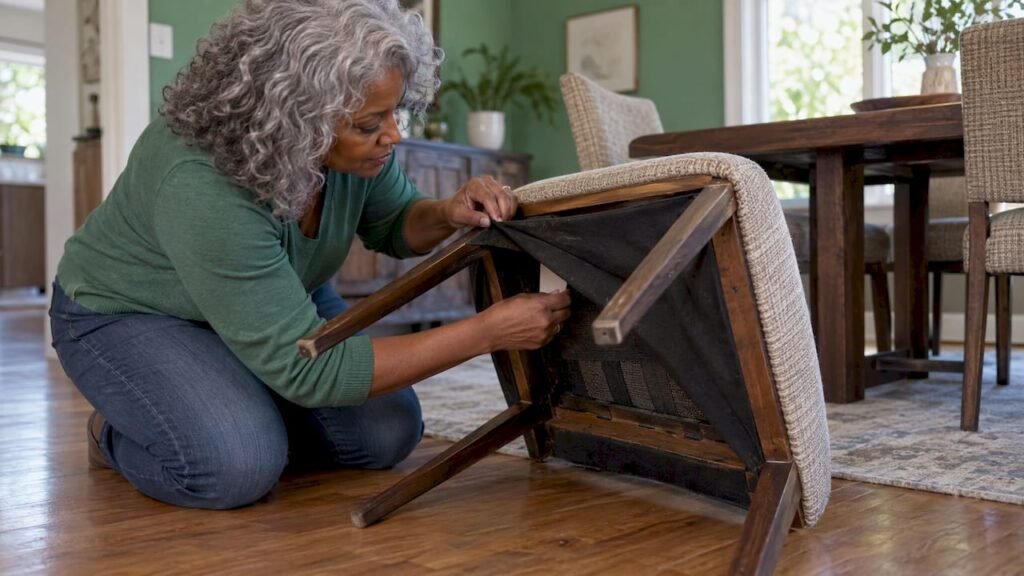
On a dining chair, flip it over and check the underside of the seat frame and the dust cover. On an armchair, lift the seat cushion and look along the frame and the back seams. Wirecutter notes that some pieces carry several tags with different methods for different parts, so read all of them.
If the tag is gone
Check the manufacturer’s website or call customer service with the model name. If that fails, or if the chair is vintage or antique, Wirecutter’s advice is to let a professional look at it rather than risk the upholstery. Until then, treat the chair as delicate: vacuum only, and spot-clean nothing.
A note on X-coded fabric
An X does not always mean a chair can never be cleaned. A New York upholstery cleaner told Wirecutter that manufacturers sometimes use the lowest-risk code to head off complaints, and that a professional is your best bet for working out the safest method on an X-coded piece. That is a judgment call for someone who can test the dyes and fibers in person.
What you need before you start
Keep the kit simple. You do not need a closet full of products.
- A vacuum with an upholstery attachment and a crevice tool
- A soft-bristle brush
- Clean white cloths or towels
- A cleaner matched to your code (water-based for W, solvent for S)
- A spray bottle of clean water for rinsing W-coded fabric
- A fan, or a room with the air conditioning running
Skip bleach and general household cleaners. A University of Nebraska extension publication warns that bleach and other household products can damage upholstery dyes, and that heat should not be applied to a stained area.
How to deep-clean an upholstered chair, step by step
This sequence follows the general method laid out in an upholstery deep-cleaning guide from a furniture retailer, adapted for single chairs.
- Inspect the chair. Look for dark spots, worn arms, loose seams and any area where the color has already faded. Note them so you know what changed after cleaning.
- Vacuum thoroughly. Dust and debris come off the surface, crevices, seams and trim first. If you skip this, you turn grit into mud once liquid goes on.
- Test a hidden spot. Apply a few drops of your cleaner to an area nobody sees, such as the back panel or under the seat. Wirecutter quotes a professional cleaning company president who suggests pressing a white rag on the spot for 10 seconds. If color transfers to the rag, the color shifts or the fabric changes, use a different solution.
- Clean without soaking. Work in small sections with a lightly dampened cloth or foam, moving from the outside of a stain inward so it does not spread. Blot, never scrub. Scrubbing roughs up fibers and drives soil deeper.
- Rinse water-safe fabric. On W-coded fabric, go over the cleaned area with a cloth dampened in clean water. This matters because residual cleaning product attracts dust, which is how a chair ends up looking dingy again within weeks.
- Dry completely. Point a fan at the chair or run the air conditioning. Stand removable cushions on their edge in an inverted V so air reaches both sides. Do not sit on the chair until it is dry to the touch all the way through.
If you have a Bissell-style routine in mind, note that Bissell suggests deep cleaning every month or two to deal with oil and odor buildup, and only on W or WS fabric. For most households, an occasional deep clean plus weekly vacuuming is plenty.
Dining chairs: the hardest-working seats in the house
Dining chairs collect food, grease, drink spills and the occasional child’s marker. The same rules apply, with a few adjustments.
- Treat spills within minutes. Blot with a clean cloth. Do not rub.
- Work the seat lightly. A dining chair seat is a thin layer of fabric over foam. Water that soaks through stays in the foam, and a damp foam core is where musty smells start.
- Do the backs and arms too. Hands leave oils on the top rail and arm tips, and these areas often look darker than the seat.
- Clean the set evenly. If you clean only the one chair with the visible stain, it can end up cleaner than its neighbors. Cleaning all of them in the same session keeps the set looking uniform.
A retailer’s guide to fabric dining chairs gives the same basic order: check the label, vacuum, use a fabric-appropriate cleaner, avoid soaking and let the chair air-dry completely.
Common dining chair stains
| Stain | First move |
|---|---|
| Grease or salad dressing | Blot, then use a cleaner that suits the code; solvent-only fabrics need a dry-cleaning product |
| Red wine or coffee | Blot right away, then use a water-based cleaner on W-coded fabric |
| Ink or marker | Do not rub; this is often a job for a professional |
| Food crumbs and dried residue | Vacuum first, then brush gently before using any liquid |
Pet odors and urine in upholstered chairs
Odor is different from a stain. A stain is on the surface. An odor lives where the liquid went. PetSmart’s stain and odor guide explains that enzyme cleaners break down pet odors instead of covering them, and that on thick cushions urine can travel deep, so you should remove the cover when possible and treat the foam insert too.
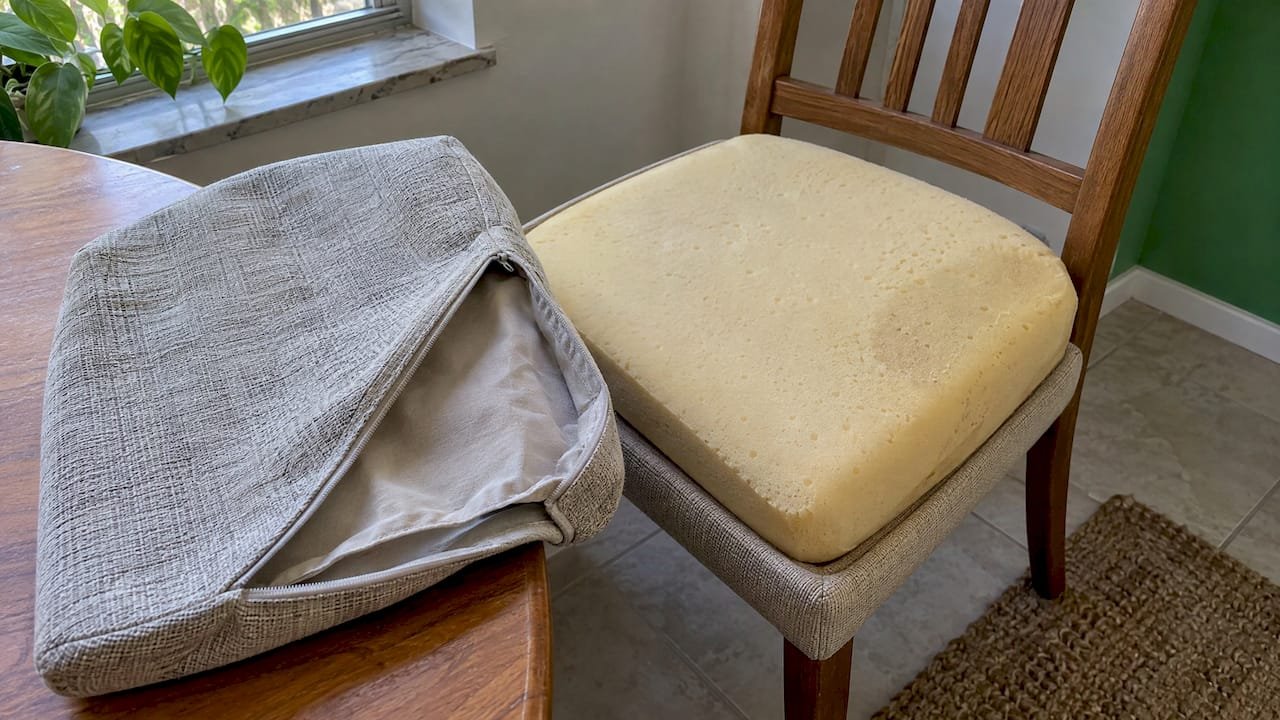
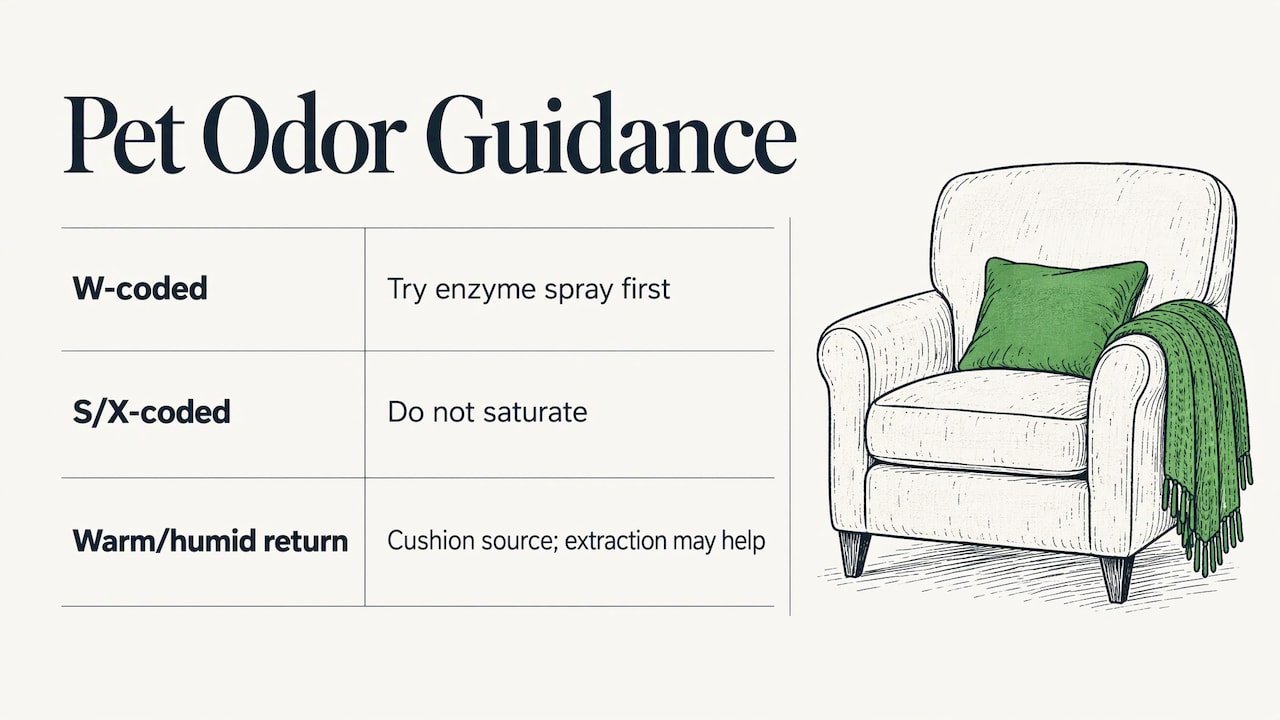
For W-coded fabric, an enzyme spray is a reasonable first step. For S or X fabric, do not saturate it. If the smell returns when the chair gets warm or humid, the source is probably in the cushion, and that is when extraction equipment does what a spray bottle cannot.
Fabrics that call for a professional
Some materials are not worth experimenting on at home:
- Silk and velvet. A furniture maker’s fabric care guide says professional cleaning is worth considering for silk, velvet or another delicate fabric. Water rings and crushed pile are very hard to reverse.
- S-coded and X-coded pieces. Solvents need ventilation and the right technique, and X-coded fabric needs an expert’s judgment.
- Antiques, vintage chairs and pieces with no tag. Replacement is rarely an option.
- Leather. Leather has its own care rules. Natural markings are part of the hide, so cleaning should not try to remove them.
- Set-in stains and heavy soil. Home products often leave a ring around the spot you cleaned.
If you are cleaning a chair you inherited or paid a lot for, the cost of a professional visit is small compared to replacement or reupholstery.
What professional chair cleaning costs
Prices vary by region, fabric and method. According to HomeGuide, steam cleaning an armchair typically runs $40 to $80, and professional upholstery cleaning averages $100 to $250 per visit, depending on the size of the furniture, the number of pieces and the method. The same source notes that a single dining chair, office chair or ottoman costs less than a sofa or sectional, and that vinyl or leather costs more.
Two things push the price up: delicate fabric that needs a slower, solvent-based approach, and pet odor or heavy staining that needs extra treatment. Two things bring it down: bundling several chairs into one visit and cleaning before stains set.
We do not publish a fixed price for upholstery cleaning, because it depends on the piece. A quote for your chairs starts with the fabric, size, number of pieces and the condition they are in.
Drying and keeping chairs clean
The cleaning is only half the job. Airflow and drying time are what prevent odor and secondary damage afterward. A fan or air conditioning speeds things up, and in a humid climate like South Florida that matters more than most people expect.
Once the fabric is clean and fully dry, an approved protector can help resist future stains. One cleaning resource notes that protectants should go on only after the fabric is fully clean and dry, and only if the manufacturer recommends it.
Day-to-day habits make the biggest difference:
- Vacuum weekly, including seams and the gap between seat and back.
- Rotate chairs so one does not take all the sun or all the use.
- Treat spills right away. Small spots are the easiest to remove.
- Keep chairs away from vents that blow directly onto the fabric.
Our perspective
Most chair damage we see is not from dirt. It is from the cleaning that came before us: a soaked seat that never dried, a cleaner that moved the dye, a ring left around a spot. In Miami, Broward and Palm Beach, humidity makes every one of those mistakes worse, because fabric and foam stay damp longer than people expect.
That is why we start every job by identifying the fabric and reading the care code, then choose the method to fit. Our IICRC-certified technicians use hot water extraction where the fabric allows it, with eco-friendly, pet-safe products, so the chair comes back clean without being left wet. We stand behind the work with a 21-day satisfaction guarantee.
Our advice: do the weekly vacuuming and the fast spot treatment yourself, because they work. Call us for the deeper job, for delicate fabrics and for pet odors that have reached the cushion. Chairs cleaned on a regular schedule are easier to clean and last longer.
Dr
Professional chair cleaning across South Florida
If your chairs are in Miami, Broward or Palm Beach County, we clean dining chairs, armchairs and office chairs, along with sofas and sectionals, at your home or business. We offer same-day and next-day booking when you need it. Start on our upholstery cleaning page, or see the local pages for Miami and Fort Lauderdale.
If the whole room needs attention, we also clean carpets, area rugs, drapes, mattresses and tile. Our furniture deep cleaning guide explains the methods and when a pro is worth it. For a quote, visit drsteemer.com and tell us the fabric, the number of chairs and what happened to them.
FAQ
How much does it cost to clean an upholstered chair?
Professional steam cleaning of an armchair typically runs $40 to $80, according to HomeGuide, and costs vary by fabric, size and region. Dining chairs usually cost less each, and delicate or leather pieces cost more. A quote based on your specific chairs is the reliable number.
Can I use water on any upholstered chair?
No. Check the care code first. Water-based cleaning is fine on W and often on WS fabric, but S-coded fabric needs dry-cleaning solvent, and X-coded fabric should only be vacuumed or lightly brushed. If there is no tag, treat the chair as delicate and ask a professional.
How do I get odors out of a fabric chair?
For water-safe fabric, an enzyme cleaner breaks down pet odors instead of masking them. If urine has soaked into the cushion, the foam insert needs treatment as well. For persistent smells, call a professional with extraction equipment.
How long does a chair take to dry after cleaning?
It depends on the fabric, the amount of moisture and the airflow. Fans or air conditioning shorten drying time, and standing cushions on edge helps air reach both sides. Wait until the chair is completely dry before using it.
How often should upholstered chairs be cleaned?
Vacuum weekly and treat spills right away. Deep cleaning every month or two is one manufacturer’s suggestion for W or WS fabric. Many households do it less often and call a professional for heavily used dining chairs.
Sources
- Ashley: How to Clean Furniture
- Wirecutter: How to Clean a Sofa
- University of Nebraska: Upholstered Furniture Care, Cleaning and Stain Removal
- Furniture Plus: Deep Cleaning Textile Upholstery Guide
- Designtex: Cleaning Manual
- Bissell: How to Clean Upholstery
- Aosom: How to Clean Fabric Dining Chairs
- PetSmart: Pet Stain and Odor Removal Guide
- Hickory Chair: Fabric Cleaning Codes and Care
- HomeGuide: Upholstery Cleaning Cost
- CleaningBro: How to Clean Upholstered Dining Chairs
Recommended
- Furniture Deep Cleaning: Methods, Steps and When to Hire a Pro
- Upholstery Cleaning in Delray Beach: Methods, Costs, Care
- Upholstery Cleaning Cooper City, FL | Furniture Cleaning
- Upholstery Cleaning Dania Beach, FL | Dr. Steemer
Want it done right the first time?
Our IICRC-certified team handles carpet, upholstery, tile and stone across Miami-Dade, Broward and Palm Beach, usually the same day.