The dark path from your front door to the couch is packed-in oily soil, not just surface dust. The fix is a three-part routine. Vacuum the lane often, spot-treat spills fast, and book a professional hot water extraction on a schedule that matches your traffic. Home products can freshen a lane, but they do not replace a deep clean that physically removes soil from the pile.
Below you will find what causes those lanes, what to do each week, how a professional cleans them, how often to schedule it, and how to dry the carpet so the soil does not come right back. We clean homes and businesses across Miami-Dade, Broward and Palm Beach counties, so we also cover what South Florida’s climate adds to the problem.
TL;DR
- Traffic lanes darken because oily soil forms a film on the fibers and attracts more dry dirt. Vacuuming alone cannot lift that film.
- Vacuum lanes daily and the whole carpet twice a week. Blot spills right away and never scrub.
- Professional hot water extraction every 6 to 18 months suits most busy homes. Commercial spaces often need it monthly or quarterly.
- Use cool water, not steam, on fresh pet urine, and call a pro for stains that keep coming back.
- Dry the carpet within 12 hours with airflow, and use entry mats to slow the next round of soil.
Table of Contents
- Why traffic lanes turn dark
- What to do between professional cleanings
- How a professional cleans a high-traffic lane
- Where home cleaning helps and where it stops
- Stains and odors in busy areas
- How often high-traffic carpet needs deep cleaning
- Drying: the step that keeps lanes clean
- Our perspective on busy-area carpet
- Book a deep clean for your traffic lanes
- FAQ
- Sources
Why traffic lanes turn dark
Carpet in a hallway or entry takes the same footsteps all day, so soil builds up in one strip. Shaw Floors explains that oily soil from cooking vapors, air pollution and tracked-in dirt forms a film that dulls color and attracts more dry soil. That is why periodic cleaning is needed on top of vacuuming.
The film also explains why a lane can look gray even when you vacuum every day. The grit is gone, but the sticky layer on each fiber is still there, and it holds the next layer of dust.
In South Florida there is one more factor. Humid air keeps carpet slightly damp, and damp fibers hold on to soil and odors. We go deeper on that in our guide to what Broward and Miami-Dade humidity does to your carpet.
What to do between professional cleanings
The routine you follow between visits decides how long a deep clean lasts. Flooring manufacturers and the carpet industry agree on the basics.
Vacuum the lanes more than the rest
Shaw recommends vacuuming heavy-traffic lanes daily and the whole carpet twice weekly, and notes that heavily soiled areas may need five to seven passes. Frequent vacuuming matters because it removes abrasive grit before it works down below the pile.
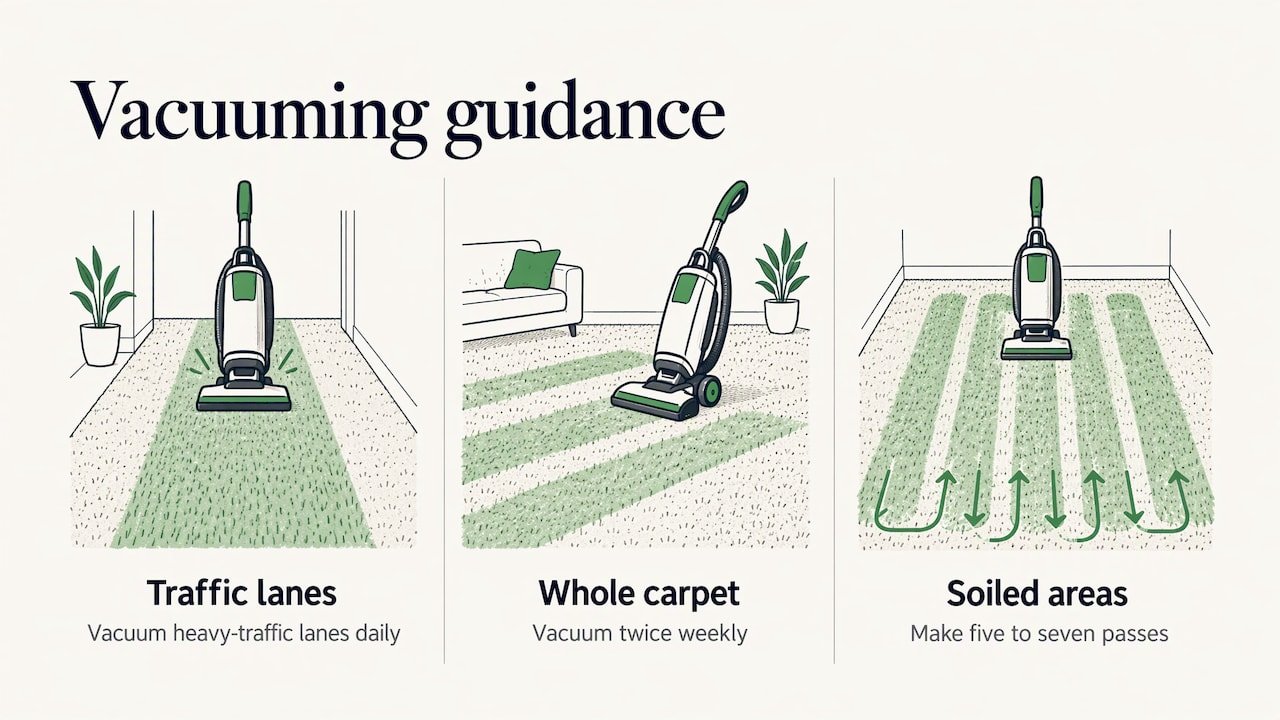
Check your machine settings too. The same guidance says thick loop, wool-blend and shag carpets may need suction-only or a raised brush to avoid fuzzing or yarn damage.
Treat spills the moment they happen
The Carpet and Rug Institute (CRI) advises that you blot liquids with a plain white absorbent cloth, scoop semisolids and vacuum dried solids. Never scrub, because scrubbing pushes soil deeper and can distort the pile. Before using any spot product, pretest it on a hidden corner for colorfastness, apply a small amount following the label, and blot from the outside of the spot toward the center.
One warning from CRI is worth repeating. Layering several inappropriate spot products can cause permanent staining or color loss. A few products stacked on one spot is the usual way a fixable stain becomes a permanent one. If the first approved product does not work, stop there.
Stop soil at the door
CRI recommends entry mats, removing shoes indoors and changing air filters to cut down dirt and airborne dust. In a Miami home, a mat outside and another inside the front door catches most of what a walkway sends in, including wet sand and pool-deck residue.
How a professional cleans a high-traffic lane
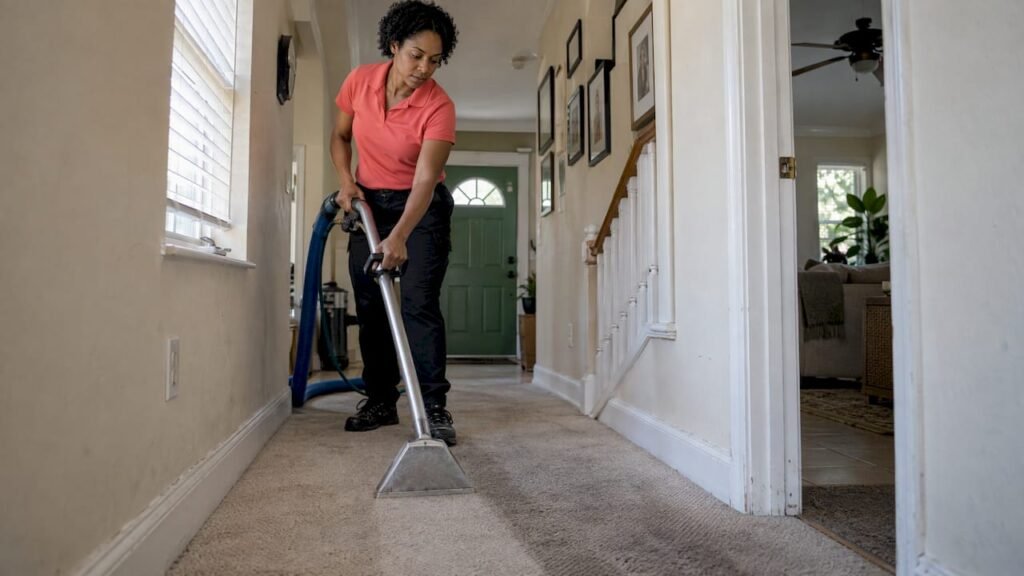
A lane needs more than a pass with a wand. The CRI commercial standard describes the professional sequence: vacuum, apply a prespray according to the label, agitate, allow dwell time, extract with a certified deep-cleaning system, and dry fully.
Each step has a job:
- Pre-vacuum. Dry soil comes out first so it does not turn to mud when water goes on.
- Prespray. A cleaning solution loosens the oily film. Lanes usually get a stronger application than the rest of the room, within what the label allows.
- Agitation. Light brushing works the solution into the fibers.
- Dwell time. The product needs minutes to break the film down. Rushing this step is why quick cleanings leave a ghost of the path.
- Hot water extraction. The machine rinses and pulls the used solution and soil out of the carpet.
- Drying and grooming. Airflow and a final groom set the pile and speed drying.
CRI also explains that suspended soil must be physically removed from the pile by suspending, dissolving, encapsulating or absorbing it. Moving it around or covering it is not cleaning.
What “steam cleaning” really means
Shaw notes that hot-water extraction, commonly called steam cleaning, does not actually generate steam. It applies cleaning solution and water, then recovers the used solution and soil. FLOR also calls wet extraction the only recommended restorative cleaning method for its products, which it separates from vacuuming, spot removal and interim cleaning.
This is the method we use. Our technicians are IICRC-certified, and our process is designed to remove allergens, odors and dirt without harming the fabric.
Where home cleaning helps and where it stops
A rental machine or a spray can be a good tool for fresh spots and for a light refresh between visits. CRI’s residential standard says that DIY extraction can handle spot and interim cleaning but should not replace periodic professional deep cleaning.
If you do use a machine at home, the same standard tells you to:
- Remove furniture and vacuum thoroughly first.
- Follow the carpet manufacturer’s directions.
- Avoid mixing stronger than recommended, because residue can speed up resoiling.
- Make dry passes afterward, wait before walking on the carpet or putting furniture back, and ventilate the room.
The residue point is the one most people miss. Extra detergent leaves a sticky film behind, and that film pulls dirt back into the lane within weeks. If you want to understand why a freshly cleaned carpet sometimes darkens fast, read our piece on why carpet gets dirty faster after cleaning.
Signs it is time to call a professional
- The lane is still gray after you vacuum thoroughly and spot-clean.
- Stains reappear in the same place after cleaning.
- A musty or sour odor returns when the air is humid.
- You cleaned it yourself and the carpet is still wet after 12 hours.
- The carpet has not had a deep clean in more than a year or two.
Stains and odors in busy areas
High-traffic zones collect food, drinks, pet accidents and tracked-in grease. The right response depends on what you are dealing with.
Pet accidents
For pet homes, CRI recommends more frequent vacuuming, CRI-certified pet-stain and odor products, prompt cleanup and periodic deep cleaning. It also says not to use a steam cleaner on urine spots, because heat can set the odor and the stain. For a fresh accident, blot, then use a cool-water wet-vacuum approach. If the odor lingers, that is the moment to bring in a pro who can treat the spot properly before any hot extraction. Our page on safe carpet cleaning for pets lists what to ask and what to avoid.
Wool and delicate fibers
Wool is less forgiving. WoolSafe says wool and wool-rich carpet should be cleaned with approved, low-alkalinity products without added bleaches or dyes and careful pretesting. Over-wetting, too much mechanical action and unsuitable chemicals are the main damage risks. Its restorative sequence includes pre-vacuuming, a suitable detergent, roughly 10 to 15 minutes of dwell time, spray extraction, grooming, drying and a final vacuum to remove residues. If you own wool or a high-value rug, hand it to a certified technician and tell them the fiber upfront.
Persistent or recurring stains
CRI says difficult stains should go back to the carpet manufacturer’s instructions or a CRI Seal of Approval service provider. A stain that returns after cleaning is usually wicking up from the backing or the pad, and surface treatment will not stop it.
How often high-traffic carpet needs deep cleaning
There is no single number, because the answer depends on traffic, pets, children and warranty terms. The published guidance gives a useful range:
| Source | Recommendation | Applies to |
|---|---|---|
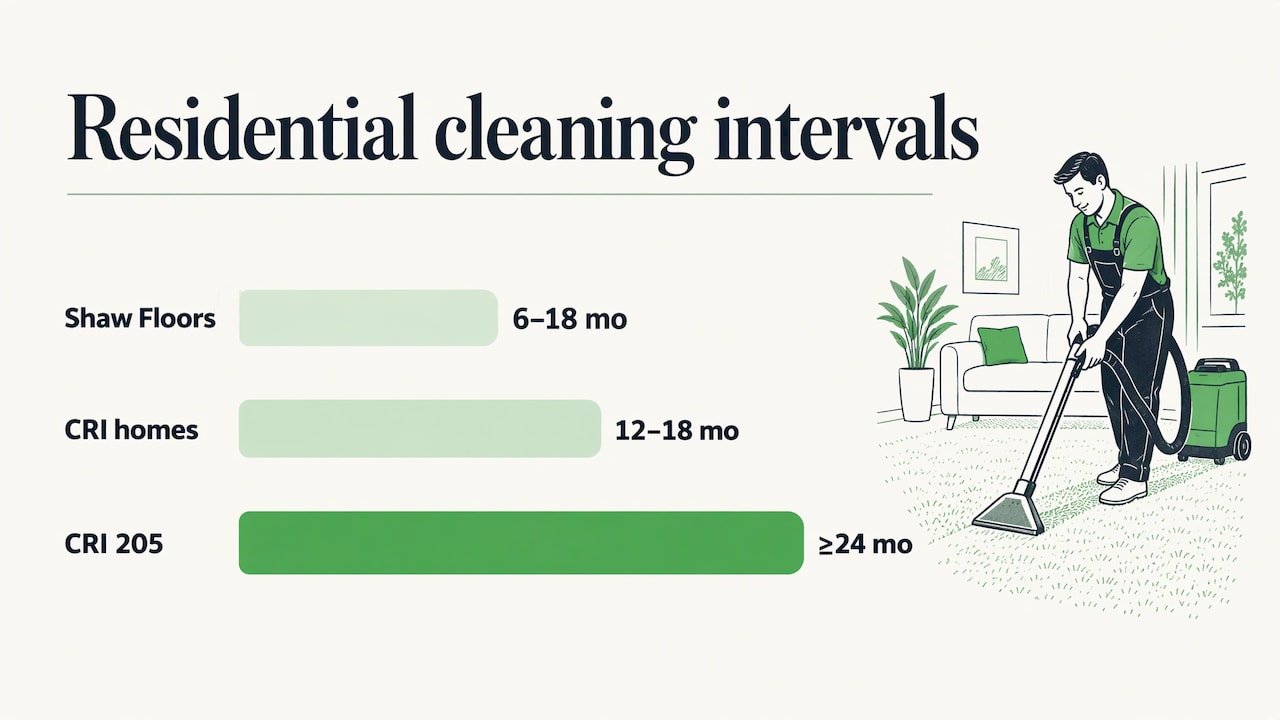
| Shaw Floors | Professional hot-water extraction roughly every 6 to 18 months, depending on traffic | Residential carpet |
| CRI, homes | Professional deep cleaning every 12 to 18 months | Residential carpet |
| CRI 205 | As needed and at least every 24 months; the manufacturer’s frequency governs warranty | Residential carpet |
| CRI heavy-traffic guidance | Daily vacuuming, weekly low-moisture interim cleaning, quarterly deep cleaning for heavy traffic or monthly for severe traffic | Commercial carpet |
The commercial schedule is guidance for offices, retail and similar spaces, not a rule for your living room. For a busy family home with pets, the shorter end of the residential range is a sensible target. For a lobby, hallway or waiting area, the commercial schedule is the better model. Warranty terms matter as well: CRI notes that Seal of Approval-certified cleaners are recommended, and sometimes required by manufacturers, to protect results and warranty coverage.
If you live in Broward, our article on how often Fort Lauderdale carpets should be professionally cleaned applies the same logic to local conditions.
Drying: the step that keeps lanes clean
A carpet that stays damp attracts soil and can smell musty, which is a real concern in Miami’s humidity. CRI 205 gives a typical drying window of 6 to 12 hours and says carpet should be dry within 12 hours. Use your HVAC airflow, fans, air conditioning, or suitable open windows, and never close up a room with wet carpet.
A few practical habits help:
- Run the AC and set ceiling fans to high in the cleaned room.
- Keep shoes off the carpet until it is fully dry, or use clean white socks for short walks.
- Wait to return furniture, or use blocks or foil tabs under the legs.
- Put entry mats down before you finish, so the first day of traffic does not undo the work.
Our low-moisture approach and extraction equipment are designed to shorten drying time, and we explain what to expect during your appointment.
Our perspective on busy-area carpet
We see the same pattern in homes from Coral Gables to Boca Raton. The owner vacuums faithfully, the lane still looks gray, and they assume the carpet is worn out. Most of the time it is not worn. It is coated.
That coating is why we build every job around hot water extraction rather than surface treatments. A traffic lane needs the film broken down and the soil rinsed out of the pile, and then it needs to dry fast. In South Florida, drying is half the job, because humid air turns a slow-drying carpet into a soil magnet.
We would rather schedule you for a deep clean before the lane gets dark than after. Regular professional cleaning protects your carpet, keeps allergens and odors down, and is gentler on fibers than repeated rounds of home spot products. Our technicians are IICRC-certified, our products are eco-friendly and pet-safe, and our 21-day satisfaction guarantee exists so you can book with confidence.
Dr
Book a deep clean for your traffic lanes
Our carpet cleaning service is priced at $99-$300 one-off, depending on the job. We offer hot water extraction, stain and odor removal, pet-safe solutions, same-day and next-day booking, and a 21-day satisfaction guarantee. We serve homes and businesses across Miami-Dade, Broward and Palm Beach counties, including Palm Beach and Fort Lauderdale.

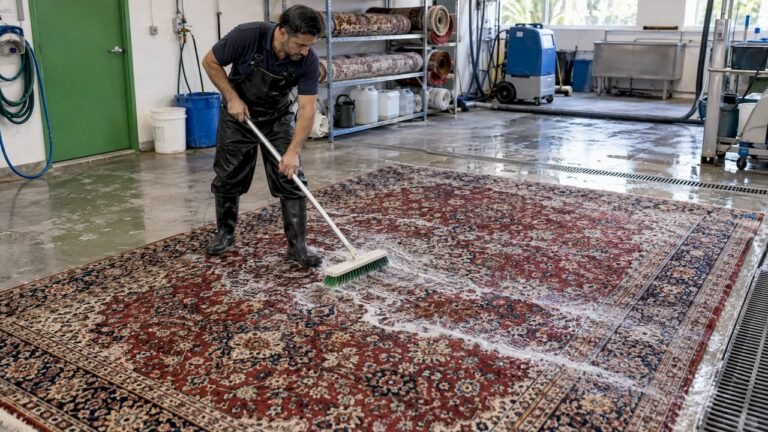
If the rest of your home needs attention, we also clean upholstery, area rugs at $1.50-$5.00 per square foot, and mattresses. Property managers can set up recurring visits for lobbies, corridors and offices. Not sure which provider to pick? Our guide on how to choose a carpet cleaner in Miami covers the questions that matter.
FAQ
What is the best way to clean a dark path in carpet?
Vacuum thoroughly, then use professional hot water extraction. The dark path is an oily film plus trapped soil, so it must be loosened with a prespray, given dwell time and extracted from the pile. Home spot products can help with fresh marks, but they rarely clear a full lane.
How often should I clean high-traffic carpet areas?
Vacuum lanes daily and the full carpet twice a week. Plan a professional deep clean about every 6 to 18 months for a busy home, and no less than every 24 months. Commercial spaces often follow a quarterly or monthly deep-clean schedule.
Can I use a steam cleaner on pet urine in a hallway?
No. CRI advises against steam on urine because heat can set the odor and stain. Blot the spot and use a cool-water wet-vacuum method with a CRI-certified pet product. If the smell stays, call a professional.
How long should carpet take to dry after cleaning?
Typically 6 to 12 hours, and it should be dry within 12. Use AC, fans and airflow, and keep the room open. If it is still wet after 12 hours, contact a professional.
Sources
- Shaw Floors: Carpet Cleaning
- Shaw Floors: Vacuuming Carpet
- Shaw Floors: Carpet Care and Maintenance Tips
- FLOR Residential Maintenance Guide
- CRI 204 Commercial Carpet Standard
- CRI 205 Residential Carpet Standard
- CRI: Cleaning and Maintenance
- CRI: Carpet Cleaning for Heavy and Severe Traffic Areas
- WoolSafe: Cleaning and Maintenance of Wool Carpets
Recommended
- Why Does My Carpet Get Dirty Faster After Cleaning? Causes & Fix
- Safe Carpet Cleaning for Pets: What to Ask and Avoid
- What Broward and Miami-Dade Humidity Does to Your Carpet Between Cleanings
- Carpet Steam Cleaning Miami, FL | Before & After Transformation | Dr. Steemer
Want it done right the first time?
Our IICRC-certified team handles carpet, upholstery, tile and stone across Miami-Dade, Broward and Palm Beach, usually the same day.