The safest way to clean a Persian rug is to have a trained specialist wash it in a controlled facility, and to limit what you do at home to vacuuming and blotting small spills. Handmade rugs hold dyes and natural fibers that react badly to hot water, strong chemicals and rough machines. This guide covers what professionals check, what is safe at home, how often to clean, and what you can expect to pay.
TL;DR
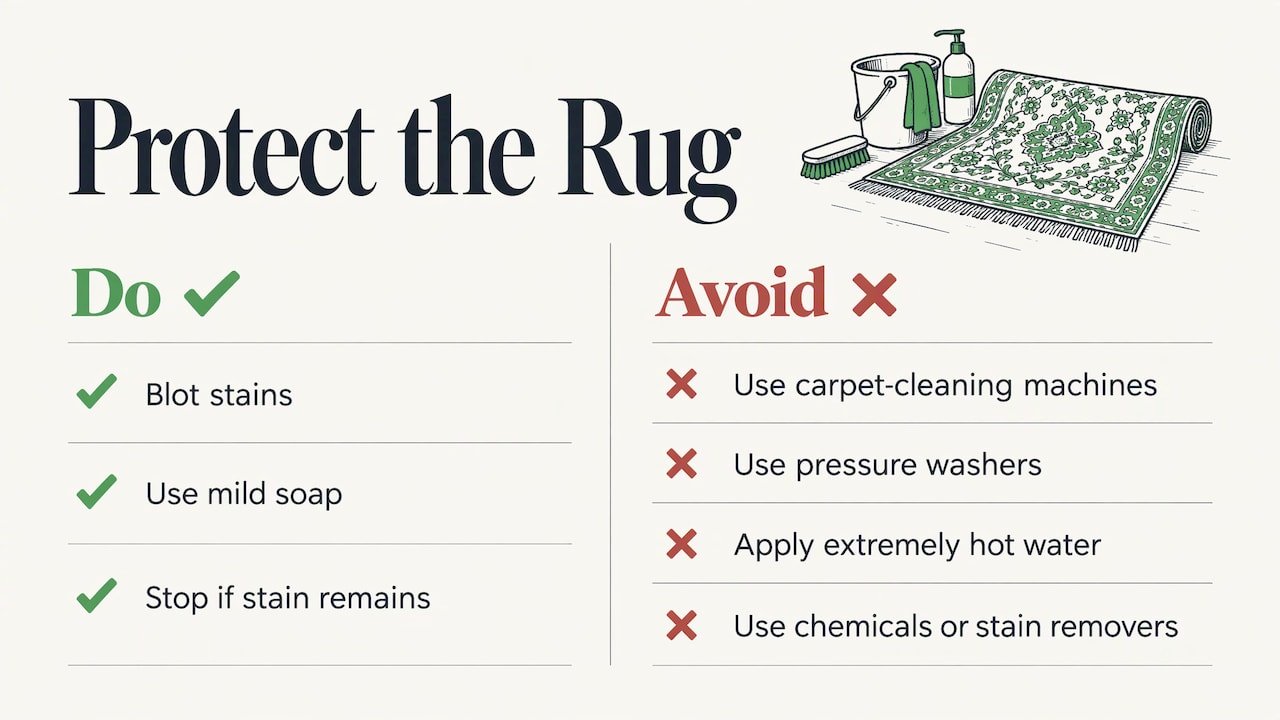
- Spot clean small spills at home with a mild dish-soap solution. Skip carpet-cleaning machines, pressure washers, very hot water and store-bought stain removers.
- The IICRC recommends that area rugs be cleaned in a controlled in-plant setting. On-site cleaning should only be done by an IICRC-certified rug technician.
- Plan on a deep clean at least once a year, and more often with young children or pets.
- National averages for rug cleaning run from about $80 to $400 per job, and rate-per-square-foot pricing is common. Handmade rugs usually sit at the higher end.
- Have a specialist look at any rug that is valuable, antique, stained, pet-affected or in poor structural shape.
Table of Contents
- Why Persian rugs need different care than carpet
- Can you clean a Persian rug at home?
- When to hand the rug to a specialist
- How professional Persian rug cleaning works
- How often to clean a Persian rug
- What Persian rug cleaning costs in the US
- Pet stains and odors
- How to choose a Persian rug cleaner
- Our perspective
- Book rug cleaning with Dr. Steemer
- After the clean: keeping a Persian rug fresh
- FAQ
- Sources
Why Persian rugs need different care than carpet
A wall-to-wall carpet is machine-made, backed with synthetic material and meant to be cleaned in place. A Persian rug is usually hand-knotted from wool or silk, dyed in ways that vary from rug to rug, and woven so that the foundation threads can shrink or distort if they are soaked wrong.
Three things go wrong most often:
- Dye bleed. The IICRC explains that rug dyes can migrate during cleaning because of long-term moisture exposure, urine contamination, high pH or overly aggressive cleaning agents. Some rugs are also over-dyed, typically in red or blue, which makes bleeding very likely.
- Shrinkage and edge curl. The same IICRC tip sheet lists both as risks of cleaning rugs on location, which is one reason in-plant cleaning is preferred.
- Trapped moisture and residue. Carpet-cleaning machines can leave chemicals and water behind, and a damp wool rug in a humid climate can develop odor quickly.
In South Florida, that last point matters more than anywhere. Humidity slows drying, so how a rug is rinsed, extracted and dried decides whether it comes back fresh or musty.
Can you clean a Persian rug at home?
You can handle light maintenance and small accidents. You should not attempt a full wash.
What is safe between professional cleanings
- Vacuum gently. Use suction only, with the beater bar off, and keep the fringe out of the nozzle. Research from the Smithsonian’s conservation institute shows that the operator’s hand can dramatically change suction strength and the force applied to a textile, so a light touch matters.
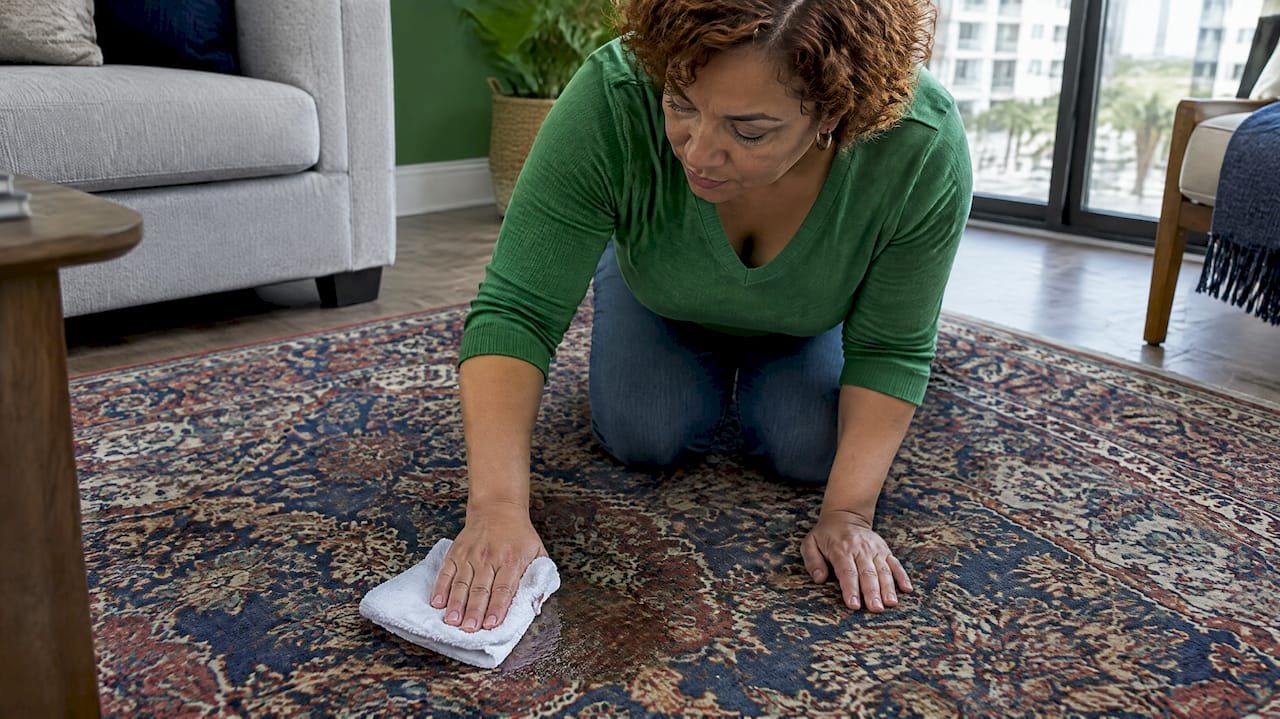
- Blot spills right away. Use a clean white cloth and press, never rub. Rubbing pushes liquid deeper and can distort the pile.
- Spot clean with a mild dish-soap solution. That is the approach experts describe for small spills. Blot with plain water afterward and let the area dry fully.
- Rotate the rug. Turning it every six months or so evens out sun and foot-traffic wear.
What to avoid
The same source lists carpet-cleaning machines, pressure washers, extremely hot water and chemicals as things to keep away from a Persian rug. It also notes that experts strongly advise against over-the-counter stain-removal products. If a stain does not lift with blotting and mild soap, stop there. Each extra product you try can set the stain or change the dye.
Test colorfastness only if you must
If you do use any solution, press a damp white cloth on an inconspicuous corner first and check whether color transfers. Because over-dyed reds and blues are the likeliest to run, treat any transfer as a stop sign and call a specialist.
When to hand the rug to a specialist
A Persian rug should be assessed by a specialist when it is handmade, valuable, heavily soiled, stained, pet-affected or structurally weak, or when you cannot confidently identify the fibers and dyes. If you are unsure about the rug or a proposed treatment, a consultation can settle whether professional cleaning is necessary.
In practice, call a pro if you see any of these:
- Pet urine, vomit or a spill that has been sitting for days.
- A musty smell that returns after the rug dries.
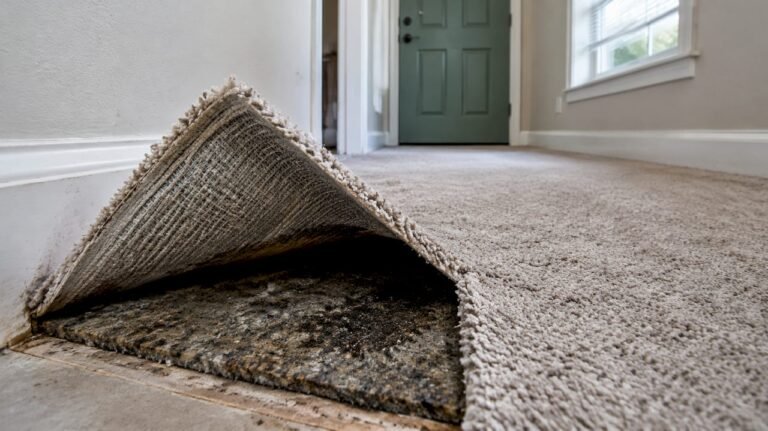
- Dirt that has worked down to the foundation. Fold a corner back, and if fine dust falls out, the rug needs more than surface care.
- Fringe that is frayed, loose or discolored.
- Any rug with family or financial value that you would not want to risk.
How professional Persian rug cleaning works
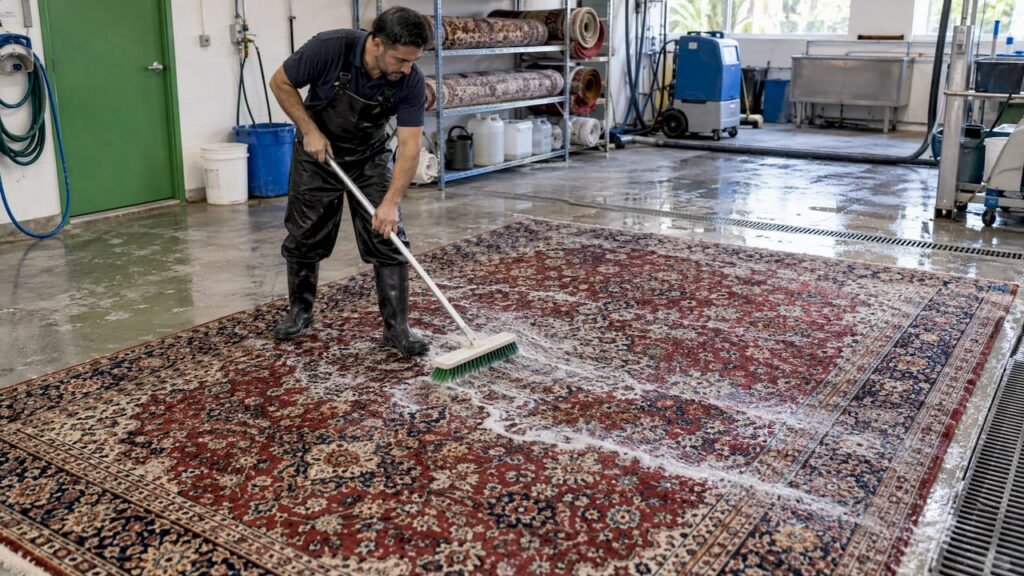
The IICRC S-100 standard for textile floor coverings recommends that area rugs be removed from the home or business and cleaned in an in-plant facility under controlled conditions. It adds that on-site rug cleaning should only be performed by an IICRC-certified rug cleaning technician trained in the methods that clean the rug safely.
The Restoration Industry Association published a specialty guide in 2008, the Industry Guide and Recommended Practice for Rug Cleaning, covering Oriental and other specialty rugs. Its list of stages is a good template for what a careful cleaner does:
- Pre-cleaning inspection. Identify fiber, dye stability, prior repairs, moth damage and existing stains.
- Dry soil removal. Dusting and vacuuming out the embedded grit that sits deep in the pile. This step matters because grit cuts fibers when the rug is walked on.
- Cleaning chemistry. A pH-appropriate, rug-safe detergent chosen for the fiber and dye test results.
- Washing and rinsing. Thorough rinsing so no detergent stays in the pile.
- Grooming and finishing. Setting the pile direction and fringe.
- Drying. Controlled so the rug dries evenly and completely.
- Correction and post-inspection. Any problem spots are retreated, and quality is checked before return.
When you interview a cleaner, ask whether they follow these stages, whether the rug will be cleaned off-site in a facility or on location, and how they handle dye-stability testing. A clear, specific answer is a good sign.
How often to clean a Persian rug
Experts suggest deep cleaning Persian rugs at least once a year, and more often if you have young children or animals. A simple schedule:
| Situation | Suggested professional cleaning |
|---|---|
| Low-traffic room, no pets or kids | About once a year |
| Dining room or entryway | Once a year, with spot care between visits |
| Homes with children or pets | More often than yearly |
| After a pet accident or spill | As soon as possible, rather than waiting for the annual visit |
In Miami, Broward and Palm Beach homes, tracked-in sand, humidity and open windows all add soil and moisture, so many households land on the more frequent end of that range.
What Persian rug cleaning costs in the US
Prices vary by size, fiber, condition and whether pickup and delivery are included. For context:
- Airtasker’s national data puts rug cleaning at $80 to over $400 per completed task, with a median of $150.
- HomeGuide reports an average of $2 to $8 per square foot, or $160 to $640 for an 8 by 10 rug.
A 9 by 12 rug covers 108 square feet, so it moves up the scale quickly when you are billed per square foot. Handmade, silk and antique rugs generally cost more than machine-made synthetics because they need hand-level care and longer drying.
Our published area rug rate is $1.50 to $5.00 per square foot. Where your rug falls in that range depends on its size, material and condition, which we confirm when we see it. Ask any cleaner for the per-square-foot rate and what it includes: inspection, stain treatment, deodorizing, pickup, delivery and wrapping.
What changes the price
- Fiber. Wool is more forgiving than silk or wool-silk blends.
- Size. Larger rugs cost more in total and need more drying space.
- Condition. Heavy soil, urine and pet damage add treatment steps.
- Extras. Moth treatment, fringe repair and protective treatments are usually separate.
Pet stains and odors
Urine is the hardest problem on a Persian rug. It can reach the foundation, and as the IICRC notes, urine contamination is one of the conditions that can make dyes migrate. Blot immediately, do not scrub, and do not reach for a store-bought stain remover. Then book a specialist as soon as you can, because the longer urine sits, the more likely the odor and color change become.
For more on odor, see our guide on whether carpet cleaning removes urine smell, and our advice on safe cleaning for homes with pets.
How to choose a Persian rug cleaner
Use this checklist when you compare providers:
- Certification. Look for IICRC-certified technicians, especially for any on-site work.
- Inspection first. The cleaner should look at the rug before quoting a method.
- Dye testing. Ask how they check for bleed.
- Clear pricing. A per-square-foot rate in writing, with extras itemized.
- Drying plan. Especially important in humid South Florida.
- A guarantee. Ours is a 21-day satisfaction guarantee.
- Handling. How the rug is rolled, wrapped and transported.
For a closer look at what careful handling looks like, read our page on oriental rug cleaning and safe care.
Our perspective
We see the same story in South Florida homes: a beautiful rug that has quietly absorbed humidity, sand, pet accidents and years of foot traffic. The owner usually waits because the rug “still looks fine.” By the time it does not, the problem is deeper in the foundation.
Our approach is built around that climate. Our IICRC-certified team uses eco-friendly, pet-safe cleaning solutions and advanced extraction designed to remove allergens, odors and soil without harming fabrics. We believe a rug is cleaned best when someone trained looks at it first, picks a method for that particular fiber and dye, and makes sure it dries fully.
That is why we back our work with a 21-day satisfaction guarantee and offer same-day and next-day booking when a spill cannot wait. Regular professional care costs far less than replacing or restoring a rug that was cleaned the wrong way.
Dr
Book rug cleaning with Dr. Steemer
We clean area rugs for homes and businesses across Miami-Dade, Broward and Palm Beach counties. Our service uses eco-friendly, pet-safe products and IICRC-certified technicians, with same-day and next-day appointments available for urgent jobs. Rug pricing is published at $1.50 to $5.00 per square foot. See the details on our area rug cleaning page.

If you want to book near you, we also serve Miami Beach, Fort Lauderdale and Coral Springs. Our team can also handle the rest of the room, from carpet to upholstery, in the same visit.
After the clean: keeping a Persian rug fresh
- Vacuum weekly in busy rooms and every couple of weeks elsewhere, with suction only.
- Use a quality rug pad to cushion fibers and reduce slipping.
- Keep furniture legs on protective cups so the pile does not crush.
- Limit direct sun with blinds or UV film, since dyes fade.
- Run the AC or a dehumidifier in humid months so the rug never stays damp.
- Act fast on spills. Blot first, then call a professional if it does not clear.
If your floors look dirty again quickly after any cleaning, our article on why carpet gets dirty faster after cleaning explains the causes.
FAQ
Can I clean a Persian rug at home?
You can vacuum it gently and spot clean small spills with a mild dish-soap solution. Avoid carpet-cleaning machines, pressure washers, very hot water and chemical stain removers. For a full wash, a trained specialist is the safer route.
How much does it cost to clean a 9×12 rug?
A 9 by 12 rug is 108 square feet, so the total depends on the per-square-foot rate. National guides cite averages of about $2 to $8 per square foot. Our published area rug rate is $1.50 to $5.00 per square foot.
How often should a Persian rug be professionally cleaned?
Experts suggest at least once a year, and more often if you have young children or pets. Clean sooner after a pet accident or a spill that soaks into the rug.
Is cleaning on location or in a facility better?
The IICRC recommends that area rugs be cleaned in a controlled in-plant setting. It says on-site cleaning should only be done by an IICRC-certified rug technician. Ask your cleaner which method they use and why.
When should I call a specialist instead of cleaning it myself?
Call one when the rug is handmade, valuable, stained, pet-affected or fragile, or when you are unsure of its fibers and dyes. A quick consultation costs little compared with a damaged rug.
Sources
- How to Clean a Persian Rug at Home, Family Handyman
- Gently Vacuumed: A term widely used, but rarely measured, Smithsonian MCI
- IICRC tip sheet on onsite area rug cleaning
- RIA adds standard development to portfolio of services, R&R Magazine
- DIY Rug Cleaning vs Professional Cleaning, Rug Owners
- How Much Does Rug Cleaning Cost in the US, Airtasker
- How Much Does Rug Cleaning Cost, HomeGuide
Recommended
Want it done right the first time?
Our IICRC-certified team handles carpet, upholstery, tile and stone across Miami-Dade, Broward and Palm Beach, usually the same day.