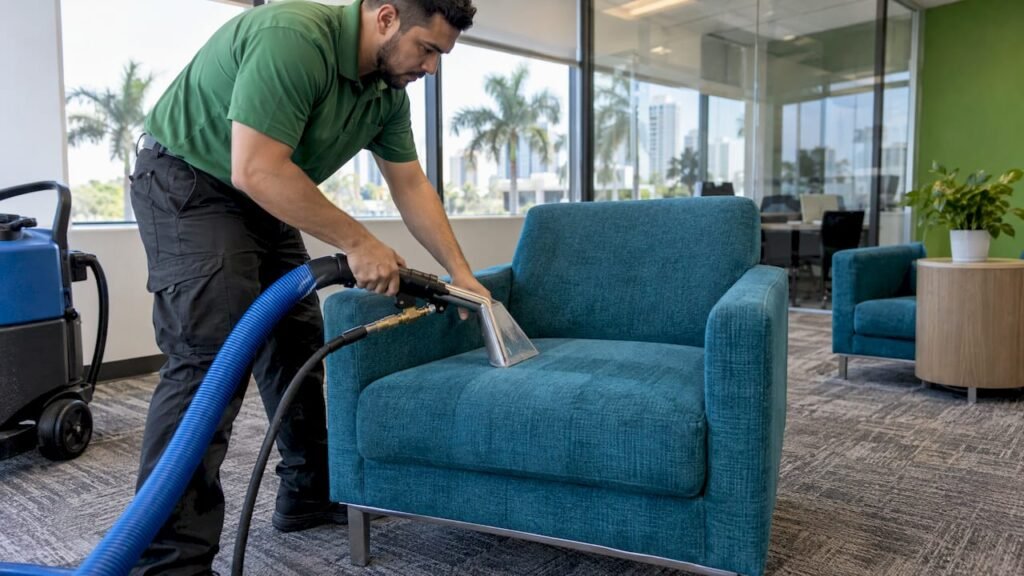
Commercial upholstery cleaning is the professional deep cleaning of office chairs, waiting-room seating, partitions and other fabric furnishings. A trained crew identifies the fiber, tests the dyes, extracts the soil and dries the fabric quickly, so the furniture lasts longer and the space stays usable. For property managers in Miami, Broward and Palm Beach Counties, our IICRC-certified team at Dr. Steemer cleans upholstery with hot water extraction and backs the work with a 21-day satisfaction guarantee. Below you will find what the service covers, how it is done, how often to schedule it and how it is priced.
TL;DR
- Commercial upholstery work typically covers office chairs, cubicle and desk partitions, waiting-room seating and fabric wall coverings, and the method depends on the fiber and the soil.
- The industry standard sequence is pre-vacuum, protect nearby surfaces, test for colorfastness, pre-treat, extract and rinse, then dry fast.
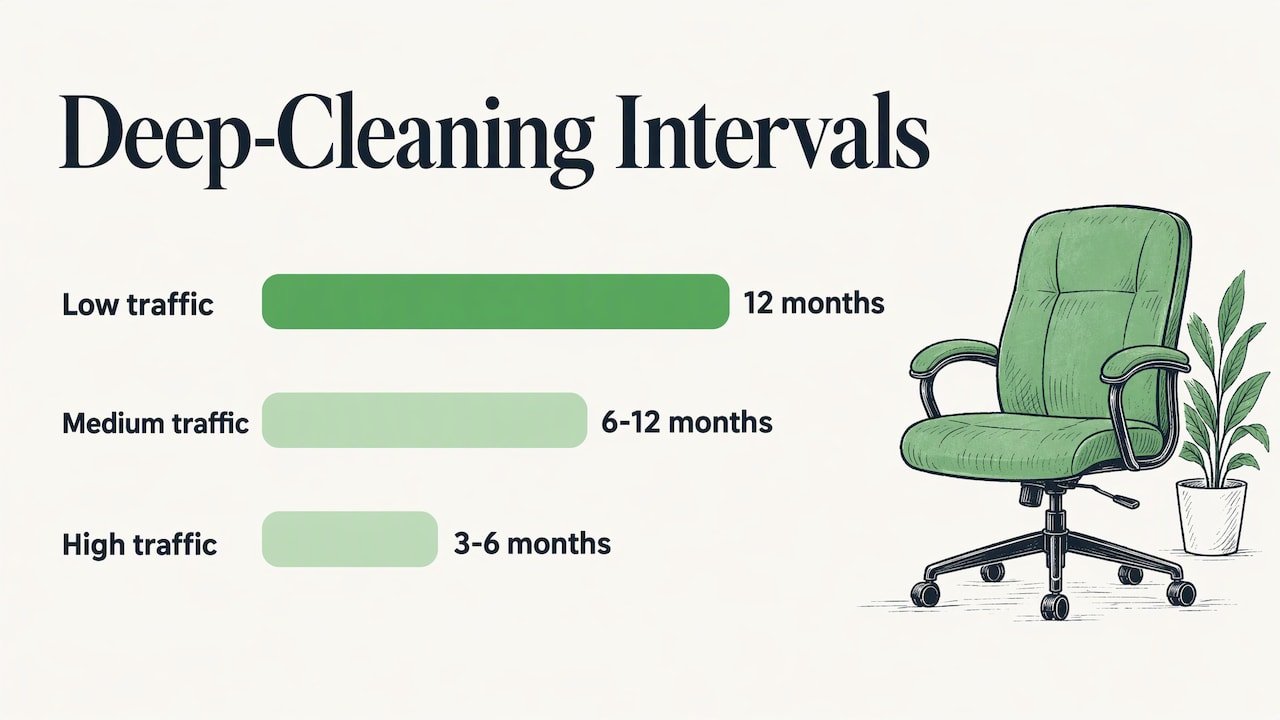
- Schedule by traffic: high-use seating every 3 to 6 months, medium every 6 to 12 months, low-traffic seating once a year.
- Specialty furniture work is often billed on top of a standard cleaning contract, so ask for a per-item or per-hour quote that lists every piece.
- Book the work for off-hours or in zones, so staff and customers are not in the room while cleaning takes place.
Table of Contents
- What commercial upholstery and furniture cleaning covers
- How professionals clean commercial upholstery
- Fabrics, stains and odors: matching the method to the material
- Drying time and keeping the workplace running
- How often to clean commercial furniture
- What commercial upholstery cleaning costs
- Our view: treat furniture as an asset, not an afterthought
- Book commercial upholstery cleaning in South Florida
- FAQ
- Sources
What commercial upholstery and furniture cleaning covers
In a business, “upholstery” is wider than sofas. The IICRC S300 draft standard (the Institute of Inspection, Cleaning and Restoration Certification’s standard for professional upholstery cleaning) describes commercial work as typically involving office chairs, office and desk partitions, and wall coverings. It names hot water extraction, encapsulation, dry powder and vapor steam as the usual cleaning methods, and notes that nylon and polyester are the most common fibers in commercial settings.
In practice, that means a property manager may be responsible for:
- Task and conference chairs in offices, where seat and back fabric collect skin oils, food spills and everyday dust.
- Cubicle walls and partitions, which are rarely cleaned and sit at breathing height.
- Reception and waiting-room seating, where many different people sit each day.
- Healthcare, hospitality and education seating, where the use is heavier and the consequences of contamination are higher.
- Fabric wall panels and banquette seating in restaurants, hotels and lobbies.
The same crew often handles the carpet underneath, which is why many managers bundle the two. If you are weighing furniture cleaning in general, our guide to furniture deep cleaning covers the methods in more detail, and our page on chair upholstery cleaning explains the fabric codes and steps for seating specifically.
How professionals clean commercial upholstery
A good job follows a fixed order. The HydraMaster upholstery cleaning procedures guide describes the routine most trained technicians use, and it lines up with what the ANSI/IICRC S300 standard covers: fibers and construction, equipment, pre- and post-cleaning inspections, cleaning methods, spot and stain removal, fabric protectors, and the difference between residential and commercial maintenance.
- Inspect and identify. The technician looks at the fabric, construction, existing stains and wear, and reads the manufacturer’s cleaning code where it exists. This is where mistakes are cheapest to avoid.
- Pre-vacuum. Dry soil removed first means less mud in the fabric once water is applied.
- Protect surrounding surfaces. Wood legs, metal frames, carpet and walls are covered or shielded.
- Test for colorfastness. A hidden area is tested so dyes do not bleed. Office fabrics in saturated colors are the usual risk.
- Pre-treat. The preconditioner is chosen by fiber, construction, weave, texture, durability, traffic, soiling level and how often the piece is cleaned.
- Agitate gently. Soft brushing works the product in without damaging the pile.
- Extract and rinse. Hot water extraction pulls the soil and the cleaning solution out of the fabric. Rinsing matters because leftover residue can attract dirt back and can harm the fabric.
- Dry and groom. Air movers speed up drying, and the fabric is groomed so the nap lies evenly.
- Final inspection. The technician checks the result piece by piece against the first inspection.
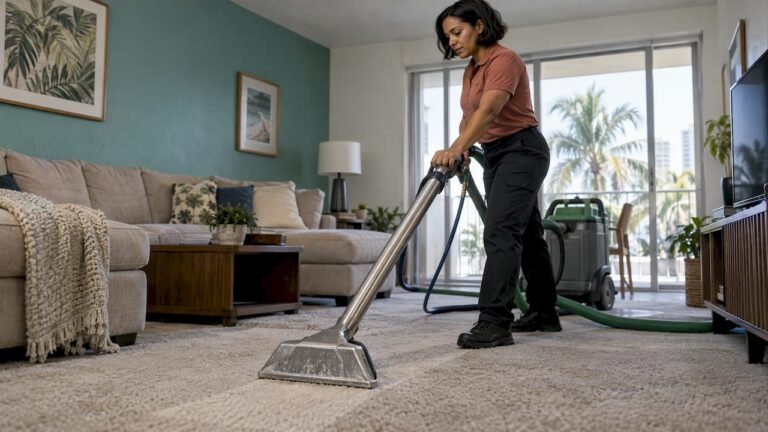
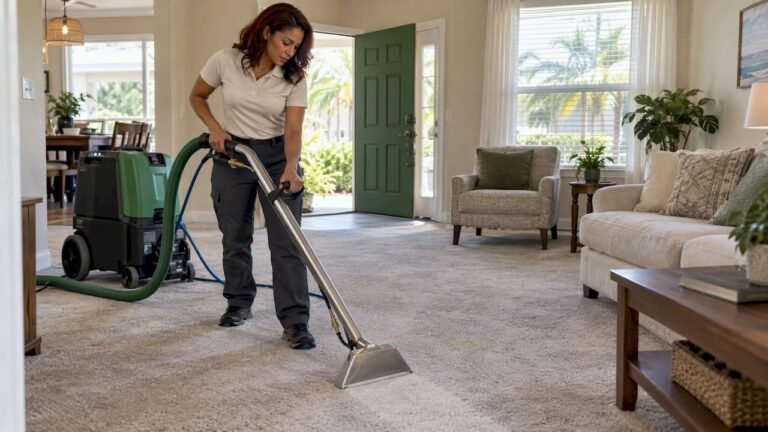
At Dr. Steemer, the extraction step is done by hot water extraction, run by IICRC-certified technicians, using eco-friendly products. It is the same core method our customers know from carpet cleaning, applied with settings suited to fabric.
Fabrics, stains and odors: matching the method to the material
Cleaning requirements vary with how a facility uses its furniture. The Association for Contract Textiles’ cleaning resources and considerations paper points out three things worth knowing before any work begins: the fabric supplier is the best source of detailed recommendations, prompt treatment of a stain increases the chance of removing it, and thorough rinsing removes residue that may harm the product.
That has practical consequences for a manager:
- Keep a record of fabrics. If you know which chairs were bought together and what the manufacturer specified, the crew can group them and choose the right approach for each group.
- Report spills early. A coffee stain treated the same day is a different job from one that has been sitting for a month.
- Mention odors specifically. Smoke, food and pet odors live in the cushion, not just the surface, so the crew needs to know so it can plan deeper extraction.
- Understand cleaning codes. Letter codes on furniture tags tell you whether water-based cleaning is safe. This explainer on fabric cleaning codes shows what the letters mean and how pre-cleaning inspection and stain treatment fit together.
In Miami’s humid climate, fabrics hold moisture longer and absorb odors more readily than in dry regions. That is one reason we build our process around South Florida conditions, with fast drying as a built-in goal.
Drying time and keeping the workplace running
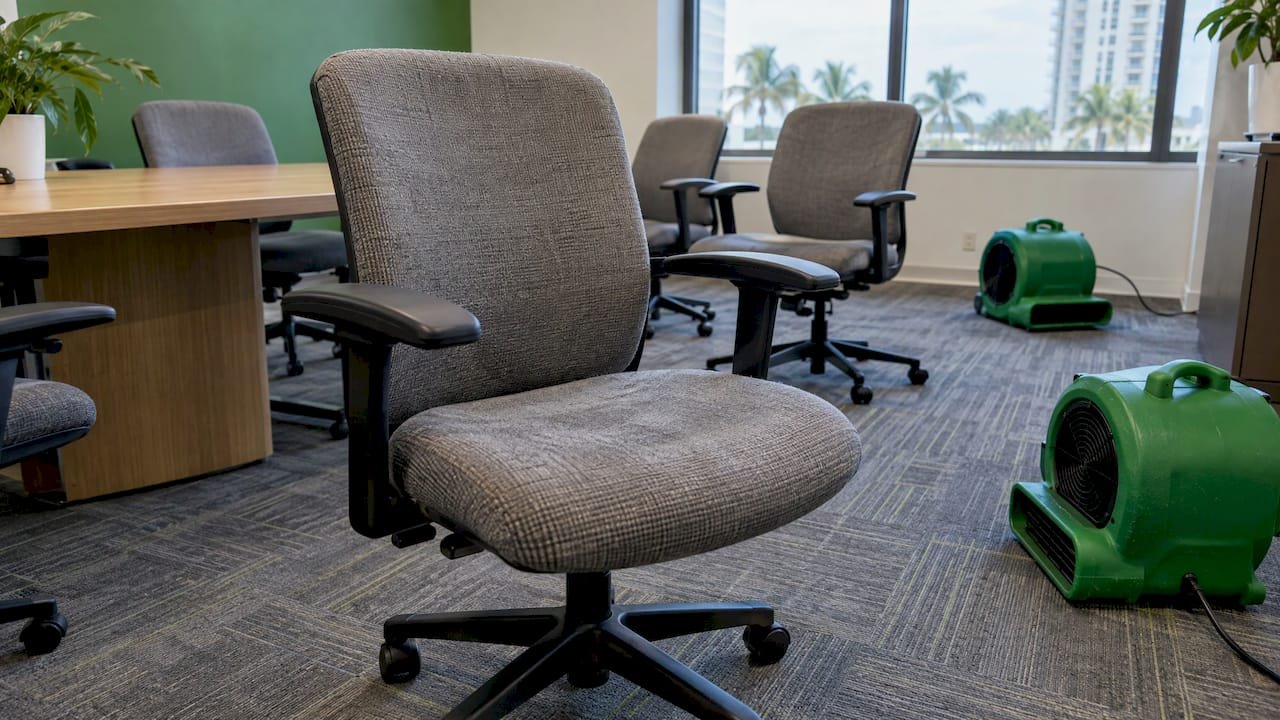
The question facilities managers ask most is when people can sit down again. The IICRC S300 draft says drying time depends on how much moisture is used, the fiber and fabric, temperature and humidity. It recommends rapid drying, ventilation and air movement, and says loose cushions, pillows and arm covers should be dried on a colorfast surface and turned as needed.
The same document addresses safety and planning. Unprotected people and pets should stay out of a room while cleaning is under way, and commercial planning should account for:
- disruption to staff,
- power cords and access to water,
- building security,
- where chairs will be placed while the work is done,
- any flame-retardant treatment already on the fabric.
The last item deserves a call to the crew before the visit: tell them if the furniture is treated, so the method is chosen with that in mind. For occupied buildings, the simplest approach is to split the job into zones or schedule it for evenings and weekends, so every chair is dry before the next shift. We offer same-day and next-day booking, which helps when a spill or an event deadline cannot wait for a standard slot.
How often to clean commercial furniture
There is no single calendar interval that suits every business. A commercial maintenance schedule from an upholstery handbook (published in Canada, but the logic travels) sets frequency by traffic zone and says use, soil exposure, the consequences of contamination and downtime should drive the cadence rather than a uniform interval.
| Seating type | Suggested deep-cleaning interval |
|---|---|
| Low-traffic seating (private offices, executive areas) | Once a year |
| Medium-traffic seating (open-plan desks, meeting rooms) | Every 6 to 12 months |
| High-traffic seating (reception, waiting rooms, shared spaces) | Every 3 to 6 months |
| Critical-use seating (clinical, food service) | Scheduled service, with immediate cleaning after any contamination |
Between deep cleans, routine care keeps the fabric in shape. Facilities schedules at large institutions show the pattern. Ohio State’s facilities cleaning schedule has private offices vacuumed, dusted and spot-cleaned monthly, while a university custodial service-level matrix lists furniture cleaning or disinfection daily in clinical, classroom, kitchen and lactation areas and weekly in offices and common areas. Those are surface routines done in-house. Deep extraction cleaning is the periodic reset on top.
Debbie Nakahara, an IICRC Certified Master in Textile Cleaning, says in Facility Executive that a customized maintenance program for the furniture portfolio is key, because location, air quality, wear and fabric vary, and that consistent scheduling extends the life of textile-covered assets. In plain terms, a recurring plan costs less over time than replacing chairs early.
What commercial upholstery cleaning costs
Commercial upholstery pricing usually follows one of three models: per item, per hour, or as part of a larger cleaning contract. One published guide to commercial cleaning pricing lists furniture, upholstery and curtain cleaning at $100 per hour as a specialty service on top of the agreed contract rate, which shows how often it is billed separately from routine janitorial work.
What moves the quote:
- Number and type of pieces. Task chairs are quick, sectionals and banquettes take longer.
- Fabric and soil level. Heavy staining or odor needs pre-treatment and extra passes.
- Access and timing. After-hours work, difficult floors or many small rooms change the labor involved.
- Frequency. A recurring plan is easier to schedule and price than a one-time rescue.
To compare quotes fairly, ask for a written list of every piece, the method and any treatment included. Our upholstery cleaning page has no published price because each job is quoted from the furnishings involved. For the carpet side of a commercial site, see our residential vs commercial carpet cleaning cost guide for Miami.
Our view: treat furniture as an asset, not an afterthought
Most offices clean the floor on a schedule and leave the chairs to chance. Then a client notices a stained waiting-room seat, or a team complains about a stale smell in the cubicles, and the fix becomes urgent.
We think the better approach is to put upholstery on the same maintenance calendar as carpet. Our IICRC-certified technicians use hot water extraction, eco-friendly products and a process built for South Florida’s heat and humidity, where fabric holds moisture and odors longer. Grouping chairs, partitions and carpet into one visit means one disruption instead of three.
We also stand behind the result with a 21-day satisfaction guarantee, and we can often book same-day or next-day when something cannot wait. If you manage a property in Miami, Broward or Palm Beach County, start with a list of what you have and where the traffic is heaviest. We can build the schedule from there.
Dr
Book commercial upholstery cleaning in South Florida
If you manage an office, clinic, restaurant or multifamily common area in Miami, Broward or Palm Beach County, our team handles upholstery cleaning with IICRC-certified technicians, hot water extraction and eco-friendly, pet-safe products. We offer same-day and next-day booking and a 21-day satisfaction guarantee.
We also clean the carpets, rugs, drapery and tile around your furniture, so one visit can cover the whole room. You can see how we handle commercial floors in our Fort Lauderdale commercial center project, or request a quote for your property through our Miami upholstery cleaning page.
FAQ
What is the difference between commercial upholstery cleaning and commercial furniture cleaning?
The terms overlap. Upholstery cleaning refers to fabric-covered pieces such as chairs, partitions and wall panels, while furniture cleaning can also include leather, vinyl and hard surfaces. A professional crew normally handles both in one visit, choosing a method for each material.
How long before the furniture can be used again?
Drying time depends on how much moisture was used, the fabric, temperature and humidity. With extraction, air movement and ventilation, many pieces are ready within hours, and scheduling the job after business hours means the furniture is dry before the next workday. Loose cushions can be dried separately and turned as needed.
How often should a business have its upholstery cleaned?
Match it to traffic. High-traffic seating such as reception areas usually needs cleaning every 3 to 6 months, medium-traffic seating every 6 to 12 months and low-traffic seating once a year. Spills and contamination should be treated right away rather than waiting for the next scheduled visit.
Do I need to prepare the space before the crew arrives?
Clear personal items from the furniture, tell the crew about any flame-retardant treatments or known stains, and make sure they have access to power and water. Keep staff and visitors out of the room while cleaning is under way, then let the fabric dry with good airflow before it is used.
Sources
- IICRC S300 Standard for Professional Upholstery Cleaning (public-review draft)
- ANSI/IICRC S300 overview
- Upholstery Cleaning Procedures, HydraMaster
- Cleaning Resources and Considerations, Association for Contract Textiles
- Fabric cleaning codes
- Commercial Maintenance Schedules, Upholstery Handbook
- FOD Cleaning, Ohio State Facilities Operations and Development
- Custodial Service Levels matrix
- Restoration and Re-Upholstery, Facility Executive
- How to Price Commercial Cleaning Jobs
Recommended
- Furniture Deep Cleaning: Methods, Steps and When to Hire a Pro
- Chair Upholstery Cleaning: Codes, Steps and When to Call a Pro
Want it done right the first time?
Our IICRC-certified team handles carpet, upholstery, tile and stone across Miami-Dade, Broward and Palm Beach, usually the same day.