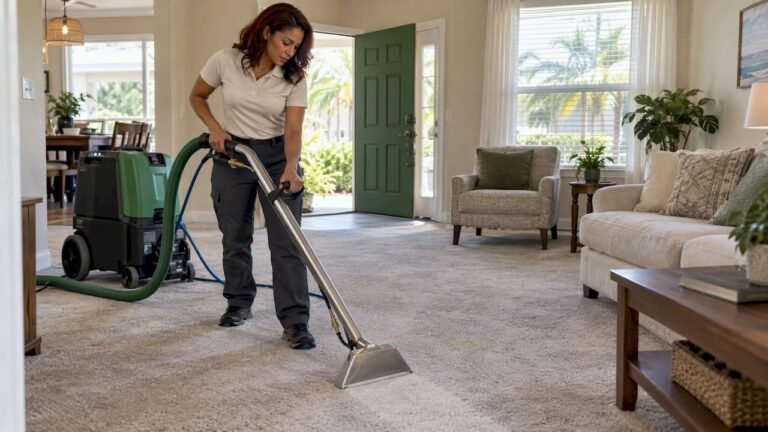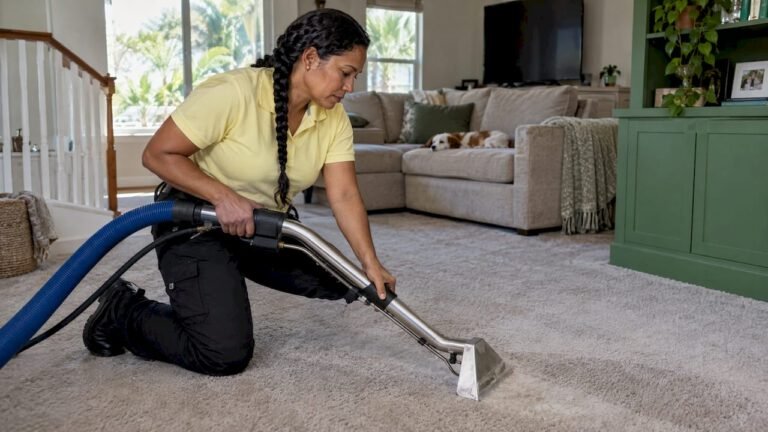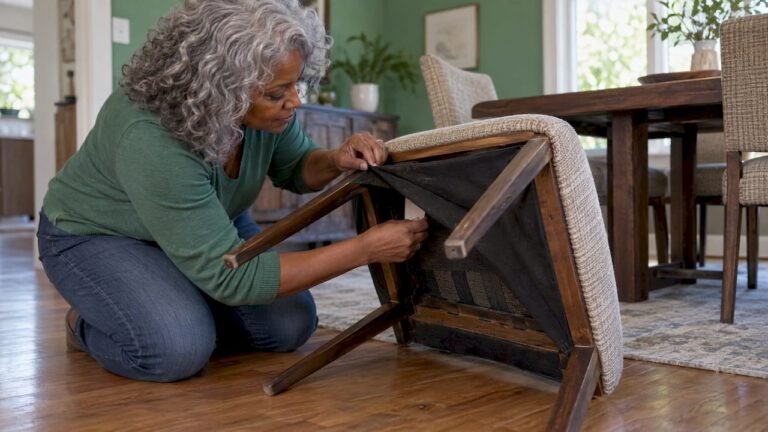
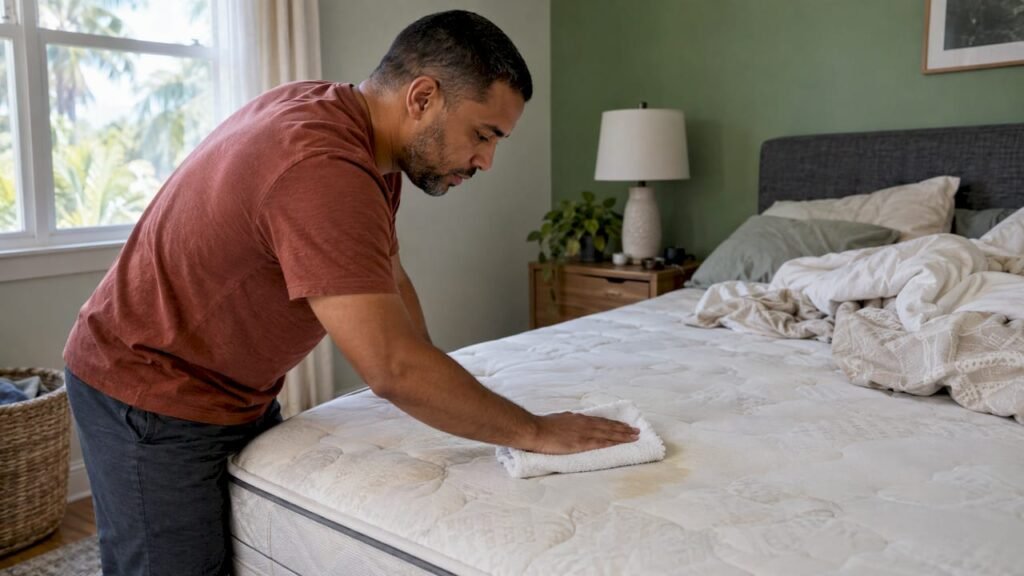
Urine in a mattress is a depth problem, not a surface problem. The stain you see is the smallest part of it, and the odor comes from what has soaked into the layers below. Blotting right away and using an enzyme cleaner help, but if the smell returns after drying, the urine has reached the inner layers. That is where professional mattress cleaning from Dr. Steemer is the dependable fix in Miami, Broward and Palm Beach counties. We are IICRC-certified, offer same-day service and back our work with a 21-day satisfaction guarantee.
Below: what to do in the first minutes, how fresh and dried stains differ, what memory foam can and cannot take, why Florida humidity changes the drying problem, and how to tell when home treatment has reached its limit.
TL;DR
- Act fast: blot (never rub), treat with an enzyme cleaner or a vinegar solution, then cover with baking soda for at least 8 hours.
- Use as little liquid as possible. Oversaturation is what leads to mold and mildew, and South Florida humidity makes drying slow.
- Memory foam should not be soaked or washed. Check your brand’s care page first.
- Old stains can need several rounds. If the odor comes back after drying, urine has reached inner layers.
- For deep or repeated contamination, book professional cleaning. Dr. Steemer offers same-day service with a 21-day satisfaction guarantee.
Table of Contents
- Why urine in a mattress is harder than a spill on a carpet
- The first ten minutes: fresh urine
- Where the home steps go wrong
- Old, dried urine stains
- Vinegar, hydrogen peroxide, baking soda, detergent: what each does
- Memory foam mattresses
- When the odor keeps coming back
- What professional mattress cleaning gives you
- Pet accidents and urine elsewhere in the room
- Protecting the mattress afterward
- Book the cleaning that finishes the job
- Our perspective
- FAQ
- Sources
Why urine in a mattress is harder than a spill on a carpet
A mattress is thick, absorbent and slow to dry. Liquid does not stay where you see it. Mattress Firm’s care guide warns that scrubbing can push urine deeper into the fibers, which is why the first rule is to blot and not rub.
Two things decide how the cleanup goes:
- How long the urine sat. Fresh urine sits mostly in the top layers. The Sleep Foundation notes that delayed cleaning lets stains set.
- How much moisture you add. Every cleaning step adds liquid. A mattress that stays damp inside can grow mold and mildew, a warning WIRED’s mattress guide attributes to a professional cleaner.
In Miami’s climate, the second point matters more than most people expect. Humid air slows evaporation, so a mattress that would dry in a day somewhere dry can stay damp much longer. Our guide to why South Florida mattresses need professional cleaning covers this in more detail.
The first ten minutes: fresh urine
This is the sequence that gives a fresh accident the best chance. It follows the steps that the Sleep Foundation, Martha Stewart and WIRED agree on.
Step 1: Strip the bed
Remove sheets, the mattress protector and any pad. Launder them separately. If the urine went through the protector, you already know it reached the mattress.
Step 2: Blot, do not rub
Press a clean white cloth or paper towels onto the spot and lift. Switch to a dry section and repeat until the cloth comes up nearly dry. A white cloth matters: colored fabric can transfer dye onto a damp mattress. Work from the outer edge of the stain toward the center so you do not widen it, as Martha Stewart’s mattress guide advises. That guide also cautions against harsh scrubbing, which can damage the fabric.
Step 3: Apply a cleaner sparingly
You have two common options:
- An upholstery-safe enzyme urine cleaner. Enzymes break down the compounds that cause the odor. Follow the label’s dwell time, because the enzymes need that time to work, as WIRED’s source points out.
- A vinegar solution. The Sleep Foundation’s version is equal parts water and distilled white vinegar plus one to two tablespoons of laundry detergent. Wait 15 minutes and blot again. WIRED’s variation is 1 cup white vinegar, 2 cups cold water and a few drops of dish soap, left 10 to 15 minutes.
Mist lightly. Do not pour. You want the cleaner to reach the stain, not to soak the core of the mattress.
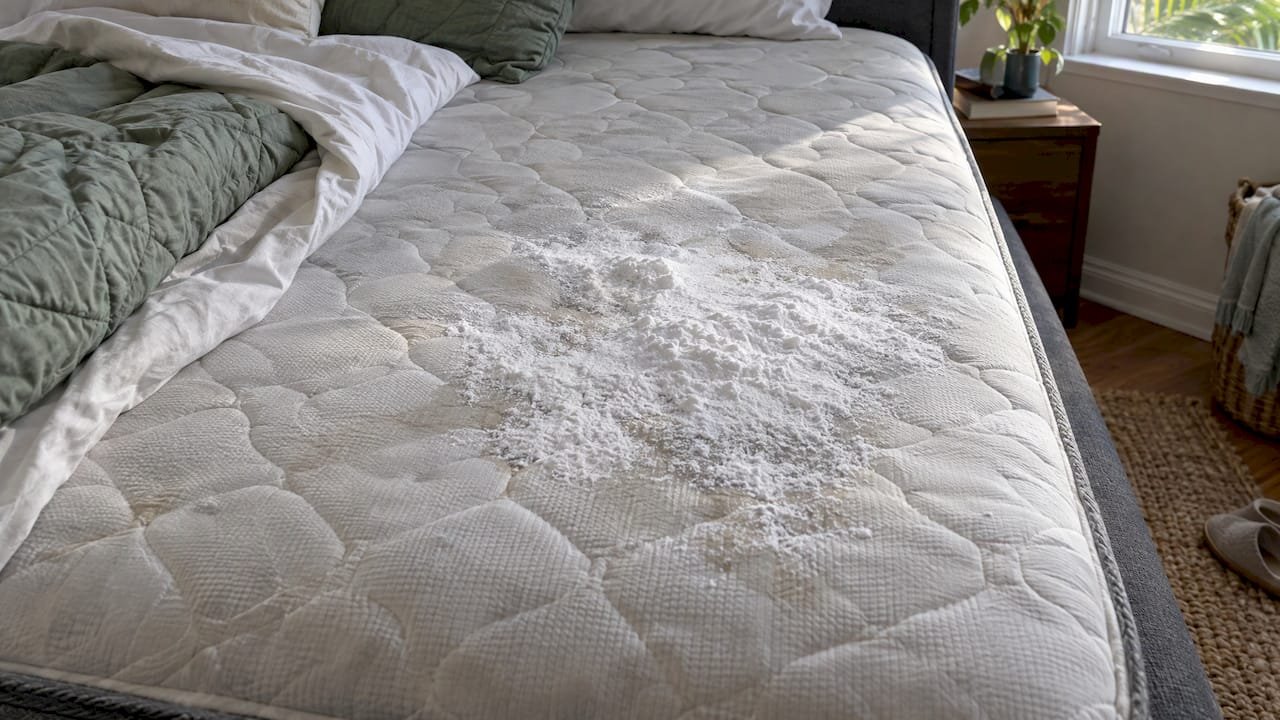
Step 4: Cover with baking soda
Baking soda absorbs moisture and helps with odor. Cover the whole damp area and leave it for at least 8 hours, ideally overnight. The spot and powder should be completely dry before you vacuum, using an upholstery attachment, as Mattress Firm recommends.
Step 5: Dry it fully
Point a fan at the spot and keep air moving in the room. The Spruce says a mattress can take up to 12 hours to dry between cleaning sessions. Do not put sheets back on until the surface is dry to the touch and the smell is gone.
Where the home steps go wrong
Most failed cleanups come from one of five mistakes:
- Rubbing. It spreads the urine and drives it deeper.
- Using too much liquid. The surface looks clean while the padding underneath stays wet.
- Skipping the dwell time. An enzyme cleaner wiped off after thirty seconds has not had time to work.
- Vacuuming the baking soda while it is still damp. It clumps and leaves residue.
- Remaking the bed too soon. Trapped moisture is where odor and mildew start.
If you recognize one of these, the stain may look gone but the odor will often come back within days. That return is the signal that matters most, and we come back to it below.
Old, dried urine stains
Yes, dried stains can still be treated, but expect more than one round. The Sleep Foundation says a vinegar solution can be used on dried stains, and the mattress may need to air-dry for several hours to several days depending on the size of the stain and the humidity in the room. The Spruce adds that dried stains may need several treatments because the urine may have seeped deeper.
A typical enzyme approach for an old stain:
- Lightly dampen the area with cold water. A mist, not a soak.
- Apply the enzyme cleaner and keep to the label’s contact time. Older stains can need an hour or more.
- Blot, then cover with baking soda overnight.
- Vacuum thoroughly once everything is dry.
- Repeat if there is any odor left.
The Spruce’s enzyme mix is half a teaspoon of enzyme stain remover or heavy-duty laundry detergent in one cup of warm water, lightly worked from the outside toward the center and then blotted dry.
Every repeat round adds moisture to a mattress that is slow to dry in Florida. By round three, the question is no longer whether the next treatment works, but whether the mattress can take another one.
Vinegar, hydrogen peroxide, baking soda, detergent: what each does
| Ingredient | What it does | Precaution |
|---|---|---|
| White vinegar | Helps break down the stain in a water-based solution | Its smell fades as it dries |
| Baking soda | Absorbs moisture and helps with odor | Must be fully dry before vacuuming |
| Hydrogen peroxide (3%) | Bleaching agent for stubborn stains | Can damage foam or latex and discolor fabric; start with a small amount |
| Laundry or dish detergent | Helps lift the stain in a mix | Use only a few drops to a tablespoon or two |
| Enzyme cleaner | Breaks down urine compounds that cause odor | Follow the label’s dwell time |
The Sleep Foundation says hydrogen peroxide can damage foam or latex and tells readers not to use bleach or harsh cleaners. The Spruce adds that peroxide, a mild bleach, can discolor printed or colored covers. Never mix cleaning products with each other beyond the recipes above.
Memory foam mattresses
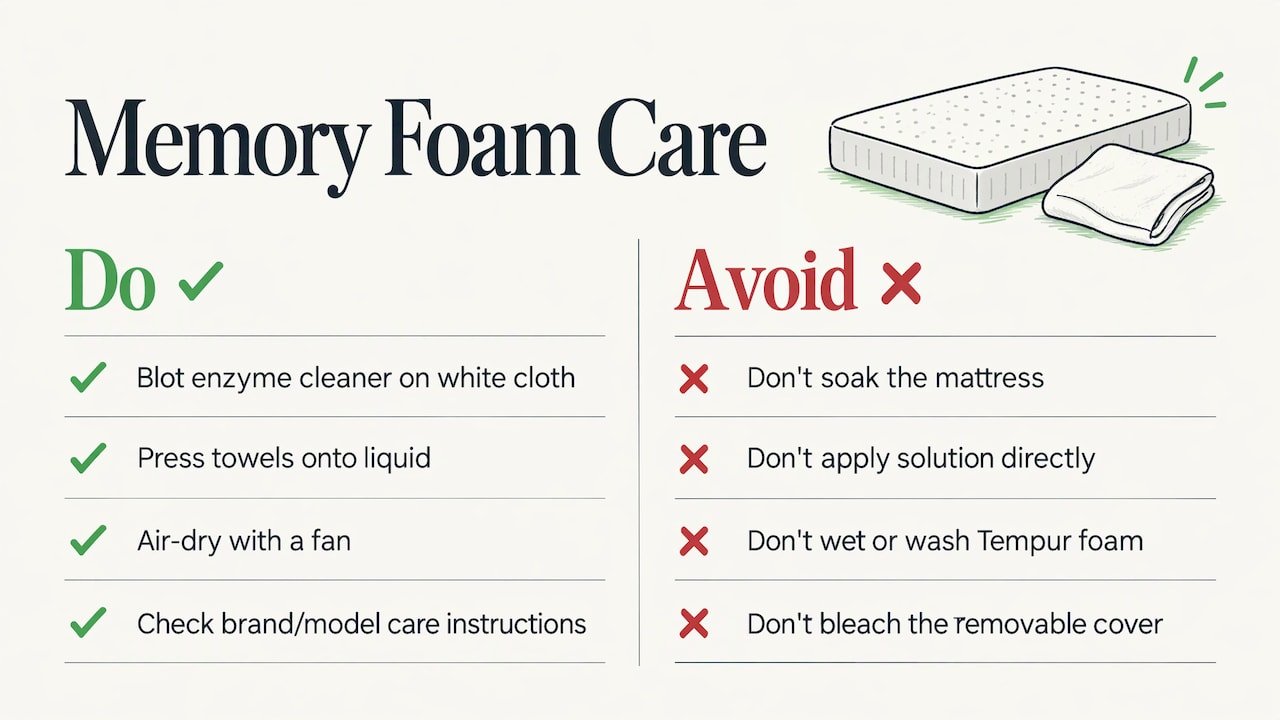
Memory foam is the least forgiving material for this job. Architectural Digest advises applying enzyme cleaner to a clean white cloth and blotting, using as little product and moisture as possible, never soaking the mattress or applying solution directly.
Manufacturers are stricter still. Tempur-Pedic’s product care page says its material should never become wet or be washed, and recommends pressing towels onto liquid and then air-drying with a fan. It also says a removable cover should be washed in cold water with mild detergent and hung to dry, with no bleach.
If you have a foam or hybrid mattress, check the care instructions for your brand and model before you apply anything. That is also the information a professional will ask for.
When the odor keeps coming back
If the smell returns once the mattress is dry, the urine has likely reached the inner layers. Martha Stewart’s guide says surface cleaning cannot reliably remove contamination at that depth, and that professional cleaning or replacement are the options.
That is the point to stop adding liquid and book a professional. Signs you have reached it:
- The odor returns after the mattress has fully dried.
- The stain is large, or the mattress was soaked through.
- It has happened more than once in the same spot, for example with a child or a pet.
- You have a memory foam or hybrid mattress and cannot safely add moisture.
- Anyone in the home has allergies or asthma and the mattress stays musty.
What professional mattress cleaning gives you
The benefit of a professional visit is control over moisture. Steam and hot water extraction pull liquid back out instead of adding more to a mattress you then have to dry. Our technicians are IICRC-certified, and our cleaning is eco-friendly and pet-safe, which matters in bedrooms used by children and animals.
What to expect and what to prepare:
- Tell us the mattress brand and model, and what happened. Material determines how much moisture it can take, and national guidance on hiring a pro also advises providing the brand and model.
- Mention how old the stain is. A fresh accident and a stain from months ago are different jobs.
- Have the bed stripped. Wash bedding on your own schedule.
- Ask about the cleaning method. We are glad to explain it.
On cost, national guidance reports a typical professional mattress cleaning range of $65 to $150. We do not publish a mattress price, so for an exact figure for your mattress, request a quote. Compare that with repeated rounds of home treatment that may not reach the source, or with replacing a mattress.
We serve the whole area, with local pages for Miami, Miami-Dade County, Broward County, Palm Beach County, Miami Beach and Dania Beach.
Pet accidents and urine elsewhere in the room
A mattress is rarely the only thing affected. If a pet or a child had the accident, the rug beside the bed, the carpet underneath and nearby upholstery may hold the same odor. Treating one item and leaving the rest means the smell lingers. Our guide on whether carpet cleaning removes urine smell explains how it works on carpet, and our page on safe carpet cleaning for pets covers what to ask about products around animals. We also clean carpets, area rugs and upholstery on the same visit.
Protecting the mattress afterward
- Use a waterproof mattress protector and wash it regularly.
- Keep the room ventilated. Air conditioning and a fan both help a damp surface dry in Florida’s humid air.
- Treat any new accident immediately, with the blot-first sequence above.
- Rotate or flip as the manufacturer advises, and check the care page for your model.
Book the cleaning that finishes the job
If the stain is old, the odor keeps returning or the mattress is foam, book mattress cleaning with Dr. Steemer. We serve homes and businesses in Miami, Broward and Palm Beach counties, with same-day service for urgent needs and a 21-day satisfaction guarantee.

Accidents in rentals, guest rooms and children’s beds are the same job: one visit, one clean, and the mattress is ready to use again once dry.
Our perspective
Most people try the home methods first, and that is reasonable for a fresh spill. The trouble starts when a second and third round of liquid goes into a mattress that cannot dry quickly in Miami’s humidity.
Our approach to mattresses is built around the local climate. In South Florida, moisture is the enemy, so we focus on cleaning methods that remove contamination and keep added water under control, using eco-friendly, pet-safe solutions.
Our team is IICRC-certified, and we stand behind the result with a 21-day satisfaction guarantee. If you are unsure whether your mattress needs us, the safest question to ask is whether the smell has come back after drying. If it has, a professional visit is the right next step.
Dr
FAQ
Can you remove old pee stains from a mattress?
Yes, but they often take several rounds. Older urine has seeped deeper, so enzyme treatment, baking soda and complete drying may need repeating. If the odor returns after drying, professional cleaning is the more reliable route.
Is vinegar or hydrogen peroxide better for urine stains?
Vinegar is the gentler choice and helps break down the stain. Hydrogen peroxide is a bleaching agent for stubborn stains, and it can damage foam or latex and discolor fabric, so use only a small amount. Do not use it on memory foam without checking your brand’s care page.
What draws urine out of a mattress?
Blotting removes liquid from the surface, and baking soda absorbs remaining moisture and odor when left on for at least 8 hours. Urine that has gone deep is not drawn out by surface treatments. Extraction by a professional pulls moisture out of the mattress.
Can I clean urine from a memory foam mattress myself?
Only lightly. Use a white cloth with a small amount of enzyme cleaner and blot, never soaking the foam. Tempur-Pedic says its material should never be wet or washed, so a deep stain on foam is best handled by a professional.
How long does a mattress take to dry after cleaning?
It can take up to 12 hours between cleaning sessions, and several hours to several days for dried stains depending on stain size and humidity. A fan and good airflow speed it up. Wait until it is fully dry before putting bedding back on.
Sources
- Sleep Foundation: How to Get Urine Smell and Stains Out of a Mattress
- Martha Stewart: How to Remove Stains From a Mattress
- WIRED: How to Clean Your Mattress
- The Spruce: How to Remove Pee Stains and Smells From a Mattress
- Mattress Firm: How to Get Urine Stains and Odors Out of a Mattress
- Architectural Digest: How to Clean a Mattress
- Tempur-Pedic: Product Care
Recommended
- Mattress Cleaning Miami
- Will Carpet Cleaning Remove Urine Smell? Miami Guide
- Professional Mattress Cleaning in Broward and Miami-Dade Counties: Why It Matters
- Mattress Cleaning Broward County | Dust Mite & Stain Removal
Want it done right the first time?
Our IICRC-certified team handles carpet, upholstery, tile and stone across Miami-Dade, Broward and Palm Beach, usually the same day.