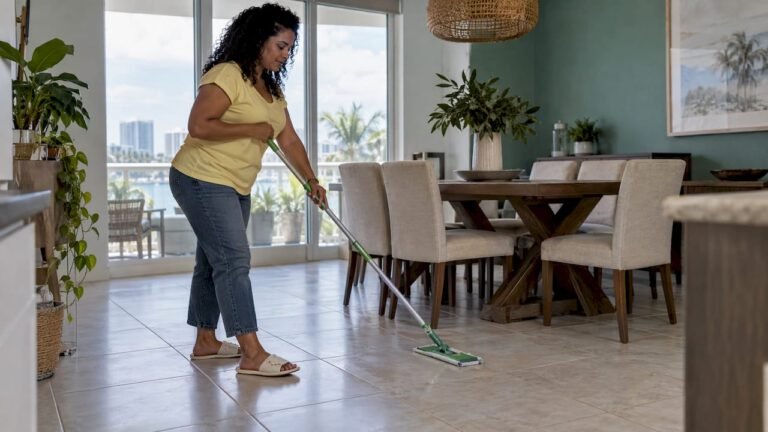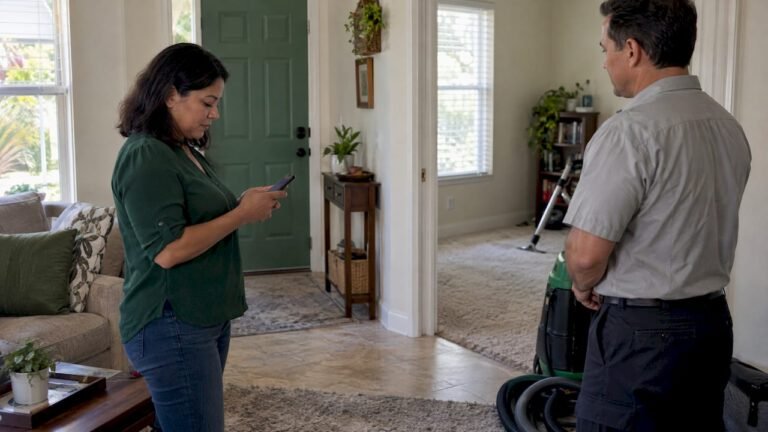
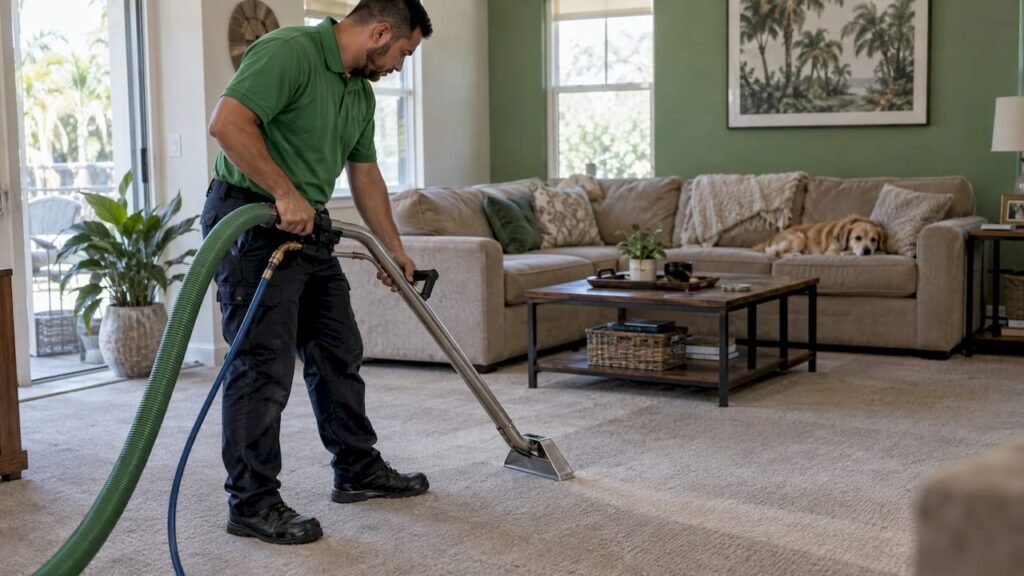
Eco-friendly carpet cleaning means removing soil, allergens and odors with the least hazardous products that still work, and then getting the carpet dry fast enough that moisture never becomes the new problem. In humid South Florida, that second half matters as much as the first. At Dr. Steemer, our IICRC-certified team uses eco-friendly, pet-safe products and hot water extraction for homes and businesses in Miami-Dade, Broward and Palm Beach counties, backed by a 21-day satisfaction guarantee.
The rest of this guide explains what the term should mean, how to read green claims, what to expect on the day, and how to keep carpet healthy between visits.
TL;DR
- “Green” has no single legal definition. Look for specific proof, such as EPA Safer Choice certification, rather than a general promise.
- Method matters as much as chemistry: thorough extraction, minimal product and fast drying protect indoor air and prevent mildew.
- Pet and child households should ask about residue, drying time and fiber compatibility before booking.
- Regular vacuuming plus a professional deep clean every 12 to 18 months is the schedule the Carpet and Rug Institute recommends.
- Our carpet cleaning is published at $99-$300, with same-day and next-day booking options.
Table of Contents
- What eco-friendly carpet cleaning actually means
- Why South Florida carpets need a different approach
- How to read a green claim
- Does the method matter? Hot water extraction explained
- Safe for kids, pets and sensitive noses
- Pet stains and odors, the green way
- Keeping carpet clean between visits
- Beyond the carpet: the rest of a greener clean
- Our perspective
- Book a green carpet clean in South Florida
- FAQ
- Sources
What eco-friendly carpet cleaning actually means
There are three parts to it, and a good provider can speak to all of them.
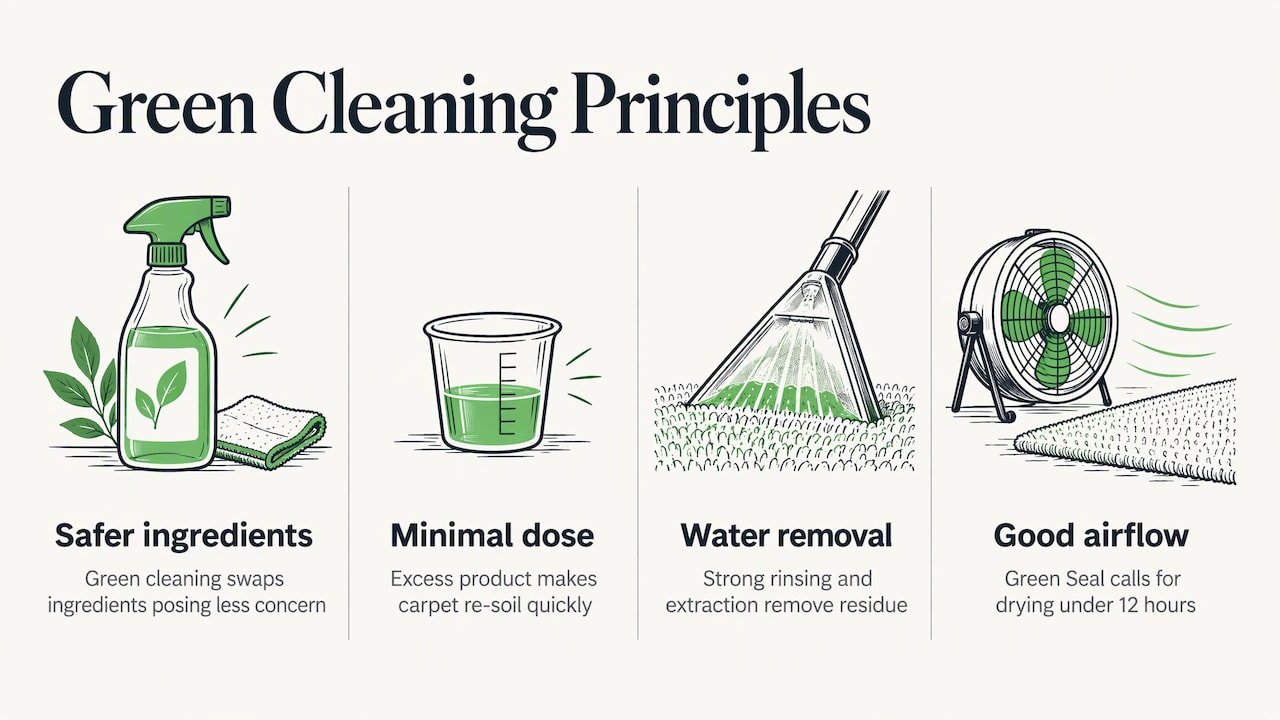
Lower-hazard products. The U.S. EPA notes that some conventional cleaning ingredients carry real concerns: certain surfactants have shown endocrine-disrupting effects in lab studies, many biodegrade slowly, and VOCs from cleaning products affect indoor air quality and contribute to outdoor smog. A surfactant is the soap-like ingredient that lifts soil off fibers, and a VOC is a volatile organic compound, a chemical that evaporates into room air. Green cleaning swaps these for ingredients that pose less concern.
Less product, more extraction. Emory University’s green cleaning manual tells cleaners to minimize chemicals, because excess product causes carpets to re-soil quickly. Residue left in the pile acts like a magnet for the next round of dirt. Strong rinsing and powerful extraction solve that.
Fast, complete drying. A wet carpet in a humid climate invites mildew. Green carpet-care guidance from New York State’s Office of General Services calls for extraction equipment that removes enough moisture for carpets to dry within 24 hours, and for dry vacuuming before any wet cleaning. Green Seal’s 2024 cleaning services guidebook sets the bar tighter, with carpets dried in under 12 hours.
Put together, the definition is practical: safer ingredients, the smallest effective dose, thorough water removal and good airflow.
Why South Florida carpets need a different approach
Miami’s heat and humidity make carpet trap moisture and stains more easily, and slow drying turns a clean carpet into a musty one. That is why our processes are designed around the South Florida climate: hot water extraction pulls water and dissolved soil out of the carpet instead of leaving it behind, which is the same priority the green standards above put first.
If you have already noticed a damp or sour smell, our guide to mildew smell in carpet explains the causes. For how local humidity behaves between cleanings, see what Broward and Miami-Dade humidity does to your carpet.
How to read a green claim
Words like “natural,” “green” and “non-toxic” are easy to print and hard to verify. The EPA itself warns that vague claims such as “green” or “environmentally friendly” can be greenwashing. Here is what stands behind a real claim.
| Claim or label | What it tells you |
|---|---|
| EPA Safer Choice | EPA’s scientific review team has evaluated each ingredient, and the label covers product types including carpet cleaners |
| CRI Seal of Approval | The product passed Carpet and Rug Institute testing for cleaning effectiveness, re-soiling, pH and optical brighteners, with separate protocols for spot removers and pet stain and odor products |
| Green Seal or UL ECOLOGO | Third-party environmental standards, useful when you want a second independent check on a specific product |
| “Chemical free,” “non-toxic” | Not a certification. Water itself is a chemical, so ask which ingredients are used and what they are certified for |
The CRI Seal tells you a product is carpet-compatible and effective. The Safer Choice, Green Seal or ECOLOGO listings speak to human and environmental safety. The strongest answer combines both.
Questions to ask any carpet cleaner
- Which products do you use, and can I see their certifications or safety data?
- How long will the carpet take to dry, and how do you speed it up?
- Do you pre-vacuum and extract, or just apply and brush?
- Are your technicians trained and certified?
- What happens if I am not satisfied afterward?
We are glad to answer each of these. Our technicians are IICRC-certified, which is the cleaning industry’s training and certification body; our page on what IICRC-certified carpet cleaning means and how to check it walks through how to verify it. Our 21-day satisfaction guarantee covers the last question.
Does the method matter? Hot water extraction explained
Some people hear “steam” and assume harsh. In practice, steam cleaning is a common name for hot water extraction: warm water and a cleaning solution are applied, then the machine pulls the water and loosened soil straight back out. Because the soil leaves with the water, a gentle product can do the work that a stronger one would otherwise have to do. Our hot water extraction removes allergens, odors and dirt without damaging fabrics.
The steps in a quality green clean look like this:
- Inspection and pre-test. Fiber type and dye stability decide the product and the dilution.
- Thorough dry vacuuming. Loose grit comes out first so that wet cleaning does not turn it into mud. Dry vacuuming before extraction is a standard green carpet practice.
- Targeted pre-treatment of spots and traffic lanes, at manufacturer-recommended dilutions.
- Hot water extraction with enough suction to leave the carpet only damp.
- Rinse and airflow. Rinsing removes residue, and fans or ventilation bring drying time down.
Doing every step well, with the right equipment, is the hard part. Skipping the pre-vacuum, over-wetting or under-rinsing are the usual causes of a carpet that looks fine on day one and dingy by day ten. If that has happened to you, read why carpet gets dirty faster after cleaning.
Safe for kids, pets and sensitive noses
Families usually ask the same three things.
Can we be home? Plan for the carpet to be damp for a short while. Keep children and pets off it until it is dry to the touch, and keep the room ventilated. Fast drying is why extraction power matters.
Will it smell? A strong fragrance is not the same as clean. Fragrance can simply sit on top of an odor until it fades. Real odor removal lifts the organic residue behind the smell. If anyone in your home is sensitive to scents, tell us when you book so we can plan around it.
Is it safe for my carpet fibers? Wool, silk, natural dyes and vintage rugs react differently from synthetic carpet, and stain-resistant treatments can too. That is the reason technicians test first and pick the product by fiber. For delicate pieces, see our guide to safe Oriental rug cleaning.
For households with animals, our checklist Safe Carpet Cleaning for Pets: What to Ask and Avoid lists exactly what to confirm before anyone touches your floors.
Pet stains and odors, the green way
Pet accidents are the most common reason people search for green carpet cleaning, because the cleaner has to work on the stain and be safe for the animal that made it.
Two principles hold up. First, remove, don’t mask. Enzyme-based formulas target the organic residue in urine and other pet messes, while heavy scents only cover it. Animals return to spots that still smell like them, so residue at or below the surface keeps the problem alive. Second, avoid flooding the area. Excess liquid can reach the pad underneath and slow drying, which is when odor and mildew settle in.
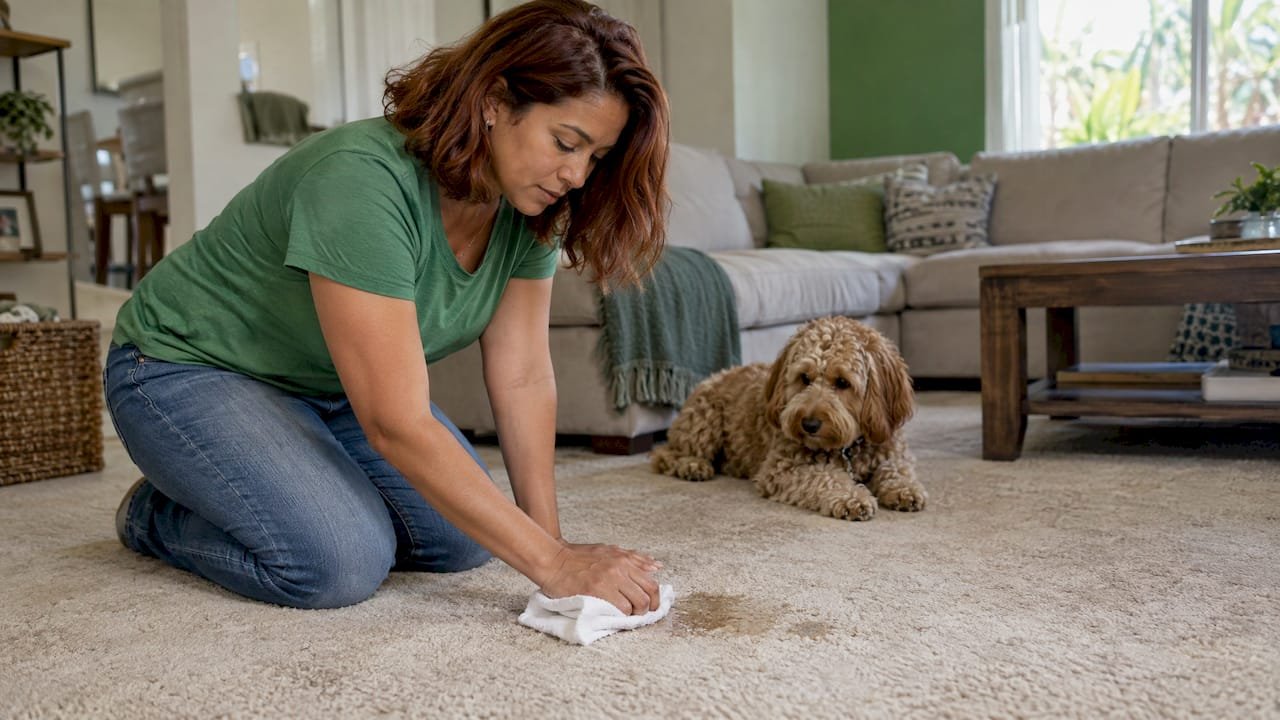
For a fresh accident, the Carpet and Rug Institute’s method is simple: blot with a dry white cloth rather than scrubbing, which frays fibers, then work cleaner from the edges toward the center and rinse with clear water. Pretest on an inconspicuous spot first. Old or deep urine that has reached the backing needs professional extraction. Our guide on pet urine carpet cleaning and when to call a pro covers what to expect.
Keeping carpet clean between visits
The greenest clean is the one you need less often. The Carpet and Rug Institute’s routine has four parts: vacuum regularly, treat spills quickly, have carpet professionally deep cleaned every 12 to 18 months, and stop dirt at the door with entry mats and regular air-filter changes. The institute calls vacuuming the most effective single habit, and slow, overlapping passes beat a quick once-over.
Green Seal’s guidebook adds a life-cycle point: extraction should happen only as needed, since the aim is to extend carpet life and reduce restorative work. For property managers, that means setting extraction by traffic level and occupancy, not by the calendar alone.
For homes, it helps to know what a good schedule looks like. These questions to ask when booking carpet shampooing with a deep clean are a useful way to think about how deep cleaning fits into a household’s routine upkeep.
For property managers
Commercial carpet works differently. Lanes of traffic dirty faster than corners, and tenants or staff are present. Schedule extraction in low-occupancy periods, which is also what Green Seal’s guidance asks for, and plan drying time before the space reopens. Our page on high-traffic carpet cleaning explains how dark lanes are treated. Same-day and next-day booking helps when a spill or an inspection can’t wait.
Beyond the carpet: the rest of a greener clean
Carpet is only one of the surfaces that hold dust and moisture. If air quality is the reason you are going green, think about the whole home:
- Air duct cleaning is published at $250-$500 and clears the dust that circulates through your vents. Air duct cleaning benefits explains what you actually get.
- Upholstery cleaning and mattress cleaning deal with the fabric surfaces your family touches most.
- Area rug cleaning is published at $1.50-$5.00 per square foot.
- Drapery cleaning is published at $10-$50 per pleat.
- Tile and grout cleaning and dryer vent cleaning round out the hard-surface and appliance side.
Bundling several services into one visit saves you from scheduling and prepping the house more than once.
Our perspective
We have one rule for every job: the cleaner should leave your home healthier than we found it. That starts with eco-friendly, pet-safe products, but it doesn’t end there.
A gentle product with poor extraction leaves residue and moisture, and in Miami’s humidity that is a recipe for odors and dingy carpet. So we pair our products with hot water extraction and a process shaped around South Florida’s climate, because the soil and the water both need to leave with us.
Our technicians are IICRC-certified, and we stand behind the result with a 21-day satisfaction guarantee. If you have kids, pets or a tenant list to keep happy, that combination is what “green” should mean in practice.
Dr
Book a green carpet clean in South Florida
Our carpet cleaning service is published at $99-$300, depending on the job, and covers homes and businesses in Miami-Dade, Broward and Palm Beach counties. You can book same-day or next-day for urgent needs, and the 21-day satisfaction guarantee applies after the visit. If you are in Palm Beach, see our Palm Beach carpet cleaning page; for the rest of our services, start at drsteemer.com.
FAQ
Is eco-friendly carpet cleaning as effective as conventional cleaning?
Yes, when the method is right. Soil comes out through thorough vacuuming, correct dilution and strong hot water extraction, not through harsher chemicals. Excess product also causes carpet to re-soil faster, so a lighter touch often gives longer-lasting results.
How long does a green carpet clean take to dry?
Green cleaning guidance asks for carpets to dry within 24 hours, and Green Seal’s 2024 guidebook sets a goal of under 12 hours. Real drying time depends on carpet thickness, airflow and humidity, so keep fans or air conditioning running and keep traffic off until the carpet is dry.
Is green carpet cleaning safe for pets and babies?
It is designed to be. Our products are eco-friendly and pet-safe. Keep children and pets off the carpet until it is dry, and ventilate the room. If anyone is sensitive to fragrance, mention it when you book.
How often should carpet be professionally cleaned?
The Carpet and Rug Institute recommends a professional deep clean every 12 to 18 months, with regular vacuuming and quick spill treatment in between. High-traffic areas, pets and humid climates can justify a shorter interval.
Sources
- Identifying Greener Cleaning Products, U.S. EPA
- EPA Safer Choice and Design for the Environment Standard
- Carpet Cleaning Practices, New York State Office of General Services
- Green Cleaning Manual, Emory University
- Cleaning and Maintenance, The Carpet and Rug Institute
- Technical Bulletins and Papers, The Carpet and Rug Institute
- Green Seal Cleaning Services Guidebook, 2024
Recommended
- IICRC Certified Carpet Cleaning: What It Means and How to Check
- Safe Carpet Cleaning for Pets: What to Ask and Avoid
- Miami Carpet Cleaning: How to Choose the Right Service
- Steam Carpet Cleaning: How It Works and What to Expect
Want it done right the first time?
Our IICRC-certified team handles carpet, upholstery, tile and stone across Miami-Dade, Broward and Palm Beach, usually the same day.